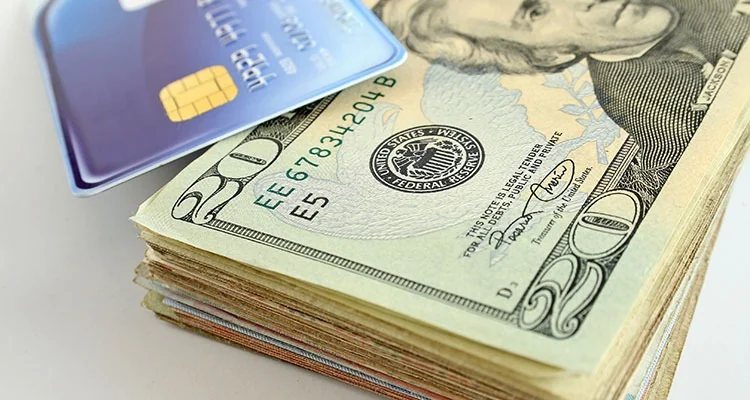

A credit card offering $500 in travel rewards or 3% cash back can look unusually generous.
Banks are not giving away money because they suddenly became charitable. Rewards are a business expense designed to influence which card you choose, how often you use it, and how long you remain a customer.
The reward is real. So is the business model behind it.
Banks do not need every cardholder to pay interest. They need the entire portfolio—merchant fees, annual fees, interest, partnerships, and customer behavior—to generate more revenue than the rewards cost.
Merchants Help Fund the Rewards
Every time you use a credit card, the merchant generally pays a fee to accept the transaction. Part of that cost can reach the bank that issued your card through interchange.
Suppose you spend $100 and receive $2 in cash back. The bank may collect transaction-related revenue from the purchase, but that does not mean it keeps the full merchant fee. Payment networks, acquiring banks, fraud costs, processing expenses, and the rewards themselves all take a share.
Visa and Mastercard are usually the networks connecting the parties, not the banks lending you money. Visa states that it does not issue cards or collect the interest paid by cardholders; those relationships are generally managed by financial institutions.
This is why rewards vary by card and purchase category. Banks may offer more points where they expect higher transaction revenue, valuable customer data, partner support, or increased spending.
The merchant sees a payment method.
The bank sees another opportunity to become the first card in your wallet.
Interest Is the Largest Profit Engine
Some customers pay the full statement balance every month and never owe interest. Others carry balances from one month to the next.
Those customers—often called revolvers—can become far more profitable because credit card interest rates are usually much higher than the cost banks pay to obtain funding.
Federal Reserve research using data from large card issuers found that the credit function, primarily involving interest earned from revolving balances, represented roughly 80% of aggregate credit card profitability during the period studied. It also found that revolvers paid most interest charges and a large portion of card fees.
That does not mean rewards are secretly charged as interest to every customer. It means rewards help banks attract a large group of people, knowing that some will eventually carry balances.
A customer may join for 50,000 points.
The bank is interested in the financial relationship that could continue for years.
Rewards Encourage More Spending
Rewards change how spending feels.
A $1,000 purchase may feel slightly easier to justify when it earns points, reaches a welcome-bonus requirement, or moves someone closer to a free flight. The purchase has not become cheaper, but the reward makes it feel as though part of the money is returning.
Banks want their card to become the default choice for groceries, travel, subscriptions, restaurants, and everyday purchases. More activity can produce more interchange revenue and more opportunities for the cardholder to carry a balance.
The Consumer Financial Protection Bureau reported that, by the end of 2022, approximately 75% of general-purpose credit cards offered rewards. Consumers earned more than $40 billion in rewards that year.
Banks would not support programs of that size unless the programs changed behavior in profitable ways.
The most valuable reward is often not the point itself.
It is the habit of reaching for the same card without thinking.
Annual Fees Help Pay for Premium Benefits
Premium cards may charge annual fees ranging from under $100 to several hundred dollars.
In exchange, cardholders may receive airport lounge access, hotel credits, travel insurance, bonus points, streaming credits, or other benefits. Those perks have a cost, but the bank may purchase them at negotiated rates rather than paying the full value advertised to consumers.
A $200 travel credit does not necessarily cost the issuer exactly $200. Some customers also forget to use every benefit, fail to redeem credits before they expire, or keep the card despite receiving less value than the annual fee.
Annual fees give the bank predictable revenue even when the customer pays every statement in full.
The best premium cardholders calculate whether the benefits fit spending they would have made anyway.
The bank benefits when customers calculate using the advertised value instead of the value they actually use.
Sign-Up Bonuses Are Customer Acquisition Costs
A large welcome bonus can be expensive for the issuer, but banks treat it much like other companies treat advertising.
They are paying to acquire a customer.
The offer usually requires the cardholder to spend a specific amount within the first few months. That immediately creates transaction volume and encourages the customer to move recurring expenses onto the new card.
The bank then hopes the person will:
Keep using the card after earning the bonus
Pay an annual fee in future years
Carry a balance at some point
Open additional financial products
Recommend the card to someone else
Not every customer becomes profitable. People who collect a bonus, pay no interest, use every benefit, and cancel before another annual fee can cost the issuer money.
Banks accept that because they manage millions of accounts as a portfolio.
They do not need to win every customer.
They need the average relationship to work.
Points Often Cost Less Than Their Advertised Value
A reward point does not have one universal value.
Its cost to the bank may depend on how it is redeemed, agreements with airline or hotel partners, negotiated purchase prices, and the number of points expected to remain unused.
Issuers record liabilities for rewards customers are expected to redeem. Those estimates can change based on redemption rates, spending patterns, product type, and the expected cost of each point. Large banks openly describe rewards as a significant expense rather than free money created from nothing.
Some customers redeem points for high-value travel. Others choose merchandise, gift cards, or checkout credits that provide less value. Some points are never redeemed.
Banks can also change redemption options and program terms, although consumer-protection rules still apply. The CFPB has warned that issuers may violate federal law when they unfairly devalue earned rewards, hide important restrictions, or prevent customers from receiving promised benefits.
Points feel like money.
Unlike dollars, however, their value is partly controlled by the company running the program.
Co-Branded Cards Create Another Layer of Profit
Airlines, hotels, and retailers frequently partner with banks to issue branded credit cards.
The bank receives access to a loyal customer base. The partner may receive payments for points, marketing, account growth, or spending connected to the card.
An airline can sell miles to a bank, which awards them to cardholders. The miles may later be redeemed for flights, but not every redemption has the same cost to the airline. A seat that would otherwise have remained empty may cost less than its advertised cash price suggests.
The arrangement can benefit everyone:
The bank gains customers and spending volume.
The partner earns revenue and strengthens loyalty.
The customer receives rewards.
The system becomes expensive for the customer only when earning the reward encourages unnecessary spending, interest charges, or an annual fee that exceeds the benefits received.
Banks Can Earn From More Than the Card
A rewards card can begin a larger financial relationship.
Once someone becomes a customer, the bank may offer checking accounts, savings products, auto loans, mortgages, investment services, or business accounts.
Even a cardholder who never pays interest may still be valuable if the relationship leads to other profitable products.
This is why banks compete aggressively for customers with strong credit and high spending. These customers may present lower default risk, generate large transaction volumes, pay premium annual fees, and become valuable across several parts of the bank.
Capital One describes the main revenue sources of its credit card business as net interest income, interchange-related income, and fees collected from customers. That combination shows why no single charge needs to fund the entire rewards program.
The card is a product.
It is also an entrance into the bank’s ecosystem.
Can a Customer Still Beat the System?
Yes—but only through discipline.
Rewards can provide genuine value when you:
Pay the full statement balance on time
Avoid buying something merely to earn points
Choose benefits that match your normal spending
Redeem rewards before they lose value
Compare the annual fee with what you truly use
Avoid carrying debt for the sake of a bonus
A 2% cash-back card can be useful when it returns money on purchases already included in your budget.
It becomes expensive when a $20 reward helps justify $1,000 of spending you could not afford—or when the balance produces hundreds of dollars in interest.
Banks are comfortable giving away points because they understand something many customers forget:
A reward can reduce the cost of a purchase, but it cannot make an unnecessary purchase profitable.
The Rewards Are Real—But So Is the Price
Credit card rewards are not necessarily a scam. Used carefully, they can produce cash back, discounted travel, purchase protection, and useful benefits without interest charges.
But banks do not evaluate rewards by asking how much value one careful customer receives.
They evaluate millions of accounts together.
Some customers generate merchant-fee revenue. Some pay annual fees. Some carry balances. Some redeem points inefficiently. Some forget benefits. Others become long-term customers for additional products.
All of those behaviors support the economics of the program.
The smartest cardholders enjoy the reward without becoming the reason the reward program is profitable.
They use the bank’s incentive.
They do not allow the incentive to use them.
Sources
Federal Reserve — Credit Card Profitability
Consumer Financial Protection Bureau — Credit Card Rewards
Consumer Financial Protection Bureau — Rules for Credit Card Rewards Programs
U.S. Securities and Exchange Commission — Capital One Annual Report
This article was written by the owner of this website using information researched from the sources listed above.
Continue Reading