The Company That Outgrew the Definition of a Space Company
For most of its history, valuing a rocket company would have seemed relatively straightforward.
It built rockets.
Customers paid to launch satellites.
Governments purchased missions.
Revenue depended largely on how many launches could be sold each year.
SpaceX has broken that model.
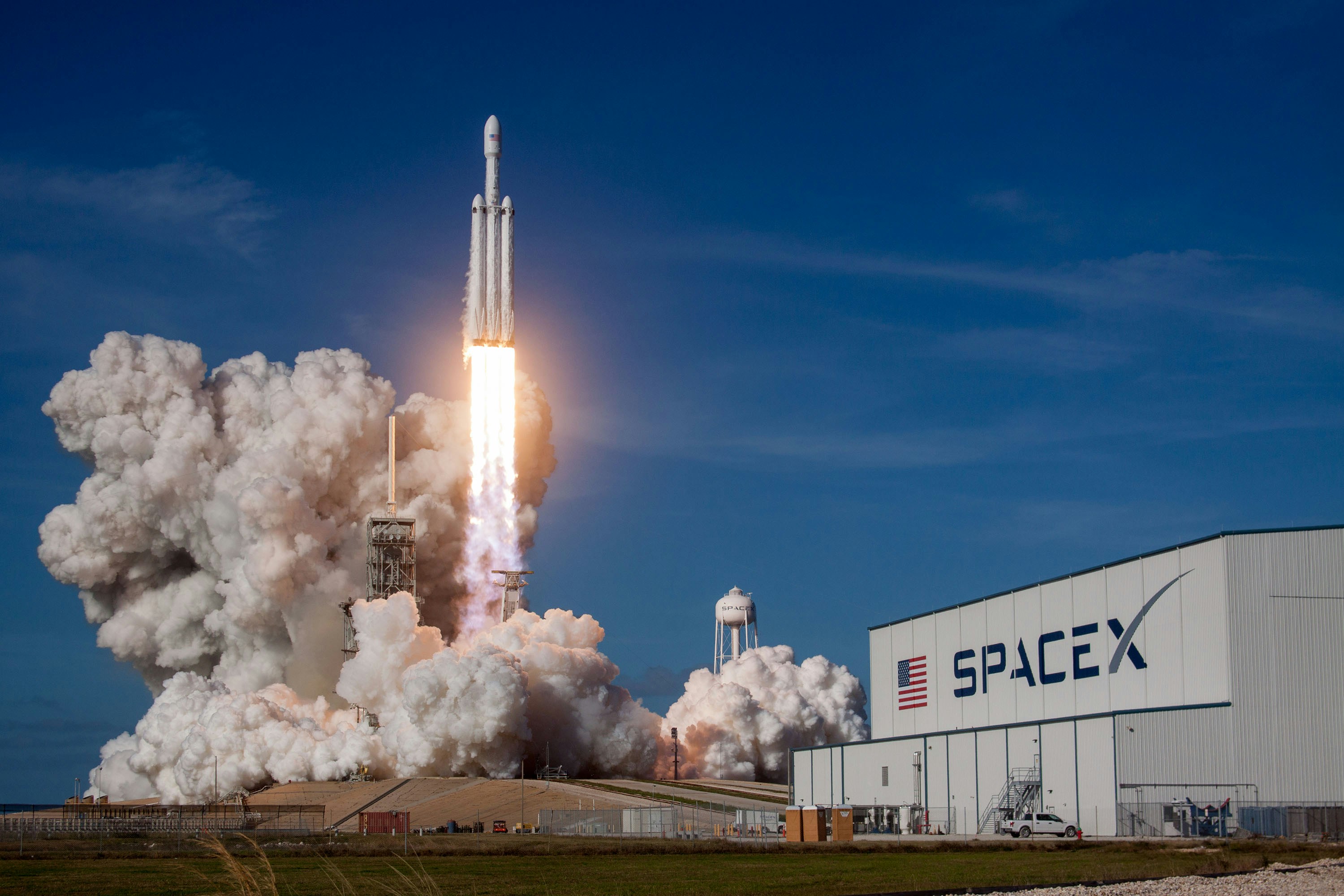
The company still launches rockets, but the rockets have increasingly become infrastructure for businesses SpaceX itself owns. Falcon 9 helped build Starlink. Starlink created recurring subscription revenue. That revenue can support development of Starship. Starship could eventually launch much larger satellites at a scale Falcon 9 cannot match. Meanwhile, SpaceX's acquisition of xAI has pushed the company into artificial intelligence and computing infrastructure, creating a potential connection between rockets, satellites, communications, data, and AI.
This is why the question surrounding SpaceX has changed.
It is no longer:
How valuable can a rocket company become?
The more interesting question is:
How valuable could a company become if it controls the transportation system, communications network, computing infrastructure, and part of the digital economy built on top of space?
That is a much larger idea.
When SpaceX went public in June 2026, its IPO valued the company at roughly $1.75 trillion. Just weeks earlier, that number would have sounded almost impossible for a business built around rockets and satellites. Yet investors were no longer valuing SpaceX merely as an aerospace manufacturer.
They were valuing what the infrastructure might eventually make possible.
Starlink Changed the Entire Economics of SpaceX
The first great transformation inside SpaceX did not come from selling more rocket launches.
It came from becoming its own largest customer.
Before Starlink, SpaceX primarily built rockets to carry payloads for other organizations. NASA needed a mission. A commercial satellite company needed orbit. The U.S. military needed a national-security payload launched.
SpaceX provided transportation and collected revenue.
Starlink changed that relationship.
Instead of launching someone else's satellite and earning money once, SpaceX could launch its own satellites and use them to generate revenue repeatedly for years.
That is a fundamentally different business.
A rocket launch is transactional.
Internet service is recurring.
By the second quarter of 2026, SpaceX reported 12 million Starlink subscribers, twice the number from a year earlier. Starlink revenue increased 66% year over year and represented more than half of SpaceX's $7.8 billion quarterly revenue. Its operating income increased even faster.
That is the first major reason SpaceX could eventually become far more valuable than a traditional aerospace company.
Starlink transformed rockets from the final product into part of the infrastructure needed to create another product.
SpaceX launches satellites.
Those satellites sell connectivity.
The connectivity generates cash.
The cash helps finance more satellites and more powerful rockets.
The cycle begins feeding itself.
The Real Starlink Opportunity Is Much Bigger Than Rural Internet
Starlink initially became famous for solving an obvious problem: broadband internet in places where terrestrial infrastructure is weak or nonexistent.
A farmhouse far from a city may not have fiber.
A ship crossing the Pacific cannot connect to a normal cable running down the street.
An aircraft at 35,000 feet cannot rely on a neighborhood cell tower.
A military unit operating in a remote region may need connectivity without local infrastructure.
Starlink addresses all of these situations using satellites in low-Earth orbit.
That alone can become an enormous business.
But SpaceX is pushing Starlink beyond satellite broadband.
Its customer base now includes households, businesses, airlines, maritime operators, governments, and other organizations. The company is also expanding Direct to Cell, technology intended to connect ordinary mobile phones through satellites rather than requiring every user to install a traditional Starlink terminal.
If that model develops successfully, SpaceX begins moving into a completely different market.
The competitor is no longer merely another satellite company.
It becomes the telecommunications industry.
Imagine a future in which losing terrestrial cell coverage does not necessarily mean losing connectivity because satellites overhead can communicate directly with the phone already in your pocket.
Remote roads.
Oceans.
Disaster zones.
Developing regions without dense tower infrastructure.
Emergency communications.
Industrial operations.
Military deployments.
The addressable market becomes much larger than selling satellite dishes to rural households.
SpaceX has described next-generation Direct to Cell as an effort to deliver connectivity directly to standard, unmodified mobile phones and connected devices. The economic consequence could be enormous if satellite connectivity becomes a complementary layer of the global mobile network rather than a specialized service used only when terrestrial broadband is unavailable.
This is how Starlink can evolve from satellite internet into global communications infrastructure.
And infrastructure businesses become extraordinarily valuable when billions of people or devices begin depending on them.
SpaceX Built Something Competitors Cannot Easily Purchase: Launch Capability
A satellite network has an uncomfortable requirement.
Satellites need to reach space.
If Starlink depended entirely on another company's rockets, every expansion of the network would require buying launch capacity externally.
SpaceX owns the rockets.
That vertical integration creates one of its most important advantages.
Falcon 9 does not simply generate launch revenue from outside customers. It provides the transportation system that keeps SpaceX's own communications network growing.
When SpaceX wants to deploy another group of Starlink satellites, it does not have to negotiate with a competing launch provider for every mission.
It controls much of the stack.
Rocket manufacturing.
Launch operations.
Satellite manufacturing.
Satellite deployment.
Ground infrastructure.
Consumer service.
And increasingly, mobile connectivity.
That allows economics from one part of the company to strengthen another.
More Falcon launches create operational experience.
Reuse spreads expensive hardware over multiple missions.
Greater launch capacity allows more Starlink satellites to reach orbit.
More satellites expand network capacity.
More network capacity supports more customers.
More customers create more recurring revenue.
That recurring revenue can finance the next generation of the system.
This is where SpaceX starts looking less like Boeing and more like an unusual combination of an aerospace company, telecom network, cloud infrastructure provider, and transportation platform.
Reusability Was the Breakthrough That Made the Flywheel Possible
The significance of Falcon 9 is not simply that it reaches orbit.
Rockets had reached orbit for decades before SpaceX existed.
The breakthrough was making a major portion of the launch vehicle reusable at commercial scale.
Traditional rockets historically treated extremely expensive hardware almost like ammunition.
Build it.
Launch it.
Lose it.
Build another.
SpaceX attacked that assumption.
Falcon boosters began returning to Earth, landing vertically, and flying again.
Reusability does not make launching rockets cheap in the everyday sense. Orbital spaceflight remains extraordinarily difficult and expensive.
But the economic direction changes.
An aircraft would be absurdly expensive if airlines destroyed the plane after every flight.
A ship would be economically useless if shipping companies sank it after unloading cargo.
The more frequently a transportation vehicle can operate without being completely rebuilt, the more its fixed cost can potentially be spread across missions.
SpaceX used this principle to achieve a launch cadence that competitors have struggled to match, while its own Starlink constellation created enormous internal demand for those launches.
That combination is particularly powerful.
Most launch providers have to wait for customers.
SpaceX can manufacture some of its own demand.
Then Comes Starship, the Bet That Changes the Scale of Everything
Falcon 9 built today's SpaceX.
Starship is designed for the company SpaceX wants to become.
The difference is scale.
Starship is intended to become a fully reusable transportation system capable of carrying more than 100 metric tons to orbit in a reusable configuration. If SpaceX can achieve frequent, reliable, economical reuse of both Starship and its Super Heavy booster, the amount of mass the company can deploy into space could rise dramatically.
That would matter far beyond the traditional launch market.
Starlink satellites could become larger and more capable.
Large quantities of equipment could be placed in orbit.
Lunar cargo could become more practical.
Entire new categories of spacecraft could be designed without being constrained as severely by the mass limits of smaller rockets.
And critically for SpaceX's newest ambitions, large amounts of computing hardware could potentially be launched into orbit.
Starship therefore should not be viewed simply as a larger Falcon 9.
It is an attempt to change the unit economics of space itself.
If Falcon 9 made reusable orbital rockets commercially credible, Starship aims to make massive-scale space transportation routine.
That is one of the largest assumptions embedded in the SpaceX valuation story.
It is also one of the largest risks.
Starship is still a development program. Full and rapid reuse at the scale envisioned by SpaceX is not yet an established commercial reality, and the difference between a spectacular test flight and a transportation system performing dependable missions year after year is enormous.
If Starship fails to achieve that economic transformation, several of SpaceX's most ambitious future businesses become much harder.
If it succeeds, the opposite happens.
Businesses that sound economically impossible using today's launch costs can begin looking considerably less impossible.
Starship Could Become the Railroad Into Orbit
One way to understand Starship is to forget rockets for a moment and think about railroads.
A railroad is valuable because it moves something.
But its larger economic impact comes from what becomes possible because transportation exists.
Cities develop.
Factories gain access to markets.
Land becomes more useful.
Supply chains change.
New businesses emerge beside the tracks.
Transportation unlocks other economic activity.
SpaceX is effectively betting that radically cheaper and more frequent access to orbit could do something similar.
The rocket itself earns money.
But the greater opportunity may be the economic activity enabled by the rocket.
Satellite networks.
Space stations.
Research facilities.
Defense infrastructure.
Lunar equipment.
Manufacturing.
Communications.
Observation systems.
And potentially large-scale computing.
If Starship becomes reliable enough to operate at high frequency, SpaceX would own something strategically unusual:
the transportation network serving many of the industries it also wants to enter.
That creates both extraordinary opportunity and potential concerns about market concentration.
NASA Gives SpaceX Something More Valuable Than Contract Revenue
Government contracts matter financially.
But NASA has given SpaceX something arguably even more valuable:
validation.
NASA trusts SpaceX's Dragon spacecraft to carry astronauts.
It uses SpaceX launch systems for important missions.
And it selected a version of Starship as the Human Landing System intended to carry astronauts between lunar orbit and the Moon's surface under Artemis.
NASA is working with SpaceX on Starship HLS for Artemis III and Artemis IV, while SpaceX must conduct an uncrewed lunar demonstration before astronauts use the system.
That relationship matters because human spaceflight may be one of the least forgiving businesses imaginable.
A company trusted to transport astronauts is operating at a very different level from a startup demonstrating experimental hardware.
The government relationship also creates technological spillovers.
NASA provides expertise and requirements.
SpaceX develops capability.
That capability can later influence commercial missions.
Government contracts therefore help fund infrastructure that may eventually support much larger private markets.
The same logic extends into defense.
Satellites are no longer merely scientific or commercial tools.
Modern military operations depend heavily on communications, navigation, reconnaissance, sensing, and resilient data networks.
SpaceX sits directly inside that strategic transformation.
Starshield Opens Another Door: Space as Defense Infrastructure
Starlink serves civilian and commercial connectivity.
Starshield pushes similar underlying capabilities toward government and national-security applications.
This is a fundamentally different market from consumer broadband.
Defense customers do not choose systems only because they are convenient or inexpensive.
They care about resilience.
Coverage.
Security.
Survivability.
Speed.
And the ability to operate when conventional infrastructure has been damaged or destroyed.
A distributed network of satellites can offer characteristics that traditional communications infrastructure cannot easily reproduce.
Destroying one ground tower can eliminate local service.
Disabling a network distributed across thousands of satellites is a different challenge.
SpaceX therefore has the potential to become something larger than a government contractor that delivers rockets.
It can become part of the digital infrastructure on which modern governments and militaries rely.
These relationships are valuable financially.
They may be even more valuable strategically because they can create long-term institutional importance.
There are only so many companies governments are willing to trust with systems connected to national security.
Once embedded deeply enough, replacing one becomes difficult.
The Most Surprising Part of the SpaceX Story Is Now Artificial Intelligence
Until recently, an article about SpaceX becoming the world's most valuable company could have focused almost entirely on rockets and Starlink.
That is no longer enough.
In February 2026, SpaceX acquired xAI, bringing artificial intelligence, the Grok models, X, and large-scale computing infrastructure into the company.
That dramatically changed the valuation story.
SpaceX is now attempting to connect two industries consuming astonishing amounts of capital:
space infrastructure and artificial intelligence.
The combination initially looks strange.
Why should a rocket company own an AI company?
The answer becomes clearer when viewed through SpaceX's philosophy of vertical integration.
AI requires enormous computing infrastructure.
Computing infrastructure requires chips.
Those chips consume enormous amounts of electricity and produce enormous heat.
Data centers require land, power connections, cooling, networking, and increasingly difficult infrastructure expansion.
SpaceX has proposed an alternative for part of that future:
put computing infrastructure in space.
The idea sounds like science fiction.
That does not automatically make it irrational.
Space provides nearly continuous access to solar energy under the right orbital architecture. Hardware can potentially be connected through high-speed optical links. Starship could launch enormous quantities of mass. Starlink already gives SpaceX experience operating a vast distributed satellite network.
Combine those pieces and the long-term vision becomes visible:
Starship launches computing satellites.
Satellite networks connect them.
Solar arrays power them.
AI models use the compute.
Starlink distributes data.
The company owns much of the infrastructure chain.
That is an extraordinary ambition.
It is also extraordinarily difficult.
Orbital AI Could Either Be a Trillion-Dollar Breakthrough or an Expensive Distraction
This part of the SpaceX thesis deserves skepticism.
Space data centers face serious engineering problems.
Radiation damages electronics.
Repairing failed hardware is far more difficult than replacing a server inside a terrestrial facility.
Launching hardware remains expensive.
Heat rejection in a vacuum is not magically easy merely because space is cold; spacecraft must radiate waste heat away.
Networking enormous amounts of data between Earth and orbit creates its own engineering constraints.
And terrestrial data-center technology is improving rapidly at the same time.
The economic comparison therefore cannot be:
“Solar energy in space is free, therefore space data centers are cheaper.”
Everything surrounding that solar energy matters.
Hardware.
Launch.
Replacement.
Networking.
Thermal management.
Radiation protection.
Reliability.
Space debris.
Insurance.
Regulation.
Yet the potential prize explains why SpaceX is willing to experiment.
AI infrastructure has become one of the largest capital-investment races in modern business.
If SpaceX eventually finds a way to use reusable launch economics and satellite manufacturing to make orbital computing competitive, the company would enter a market dramatically larger than rocket launches.
And this is already more than a PowerPoint dream.
In the second quarter of 2026, SpaceX's AI-related business reported rapidly growing revenue while the company simultaneously spent heavily to expand computing infrastructure. The company has said it expects to build computing capacity at enormous scale, but that spending is also one of the reasons investors have questioned whether Starlink's cash generation can support every ambition simultaneously.
The upside is huge.
So is the capital requirement.
The Hidden Advantage Is That SpaceX's Businesses Strengthen One Another
This may be the most important part of the entire valuation argument.
Imagine these businesses as independent companies.
One company builds rockets.
Another builds satellites.
Another sells satellite broadband.
Another develops direct-to-phone connectivity.
Another sells national-security satellite services.
Another develops AI.
Another wants to build orbital data centers.
Each company would need suppliers.
Each would negotiate with outside partners.
Each would pay margins to other businesses.
Each would depend on infrastructure it does not control.
SpaceX is attempting to place many of those functions under one roof.
That creates a potential flywheel:
Falcon 9 launches Starlink.
Starlink generates recurring revenue.
That revenue helps finance Starship.
Starship increases launch capacity and potentially reduces the cost per unit of mass delivered to orbit.
Greater capacity enables larger Starlink satellites and new constellations.
Better Starlink infrastructure expands broadband and Direct to Cell.
The same launch and satellite capabilities support defense and government services.
Starship can eventually support NASA's lunar architecture.
And massive launch capability could enable orbital AI infrastructure tied to xAI.
Each business can become a customer, supplier, or strategic advantage for another.
This is vertical integration taken to an almost absurd scale.
If it works, SpaceX becomes extremely difficult to compare with any existing public company.
Amazon Built Warehouses. SpaceX Is Trying to Build Infrastructure Above Earth
There is a useful historical comparison.
Amazon began by selling books online.
If someone had valued Amazon only according to the economics of online bookstores, they would have missed what the company eventually became.
Warehouses became logistics infrastructure.
Logistics served more products.
Cloud-computing infrastructure built for Amazon's own needs became AWS.
AWS became one of the world's most important technology businesses.
The original company created infrastructure for itself and discovered that the infrastructure itself could become a product.
SpaceX may be following an even more extreme version of that pattern.
Falcon rockets were infrastructure.
Then that infrastructure helped create Starlink.
Starlink became a business.
Starship may become another infrastructure layer.
The network needed for Starlink can serve other communications products.
The launch capacity needed for satellites may eventually serve AI computing systems.
A company becomes especially powerful when the tools it builds to solve its own problems become products other customers want.
SpaceX has already done this once.
The gigantic valuation question is whether it can keep doing it.
Starlink May Be the Business That Buys SpaceX Enough Time
Grand visions are expensive.
Starship development consumes capital.
AI infrastructure consumes enormous capital.
Satellites need continual replacement.
Factories need expansion.
Launch facilities require investment.
A company can have the greatest technological roadmap in the world and still fail if it runs out of money before reaching the destination.
That is why Starlink matters so much.
It is not merely one opportunity among many.
It is increasingly the financial engine giving SpaceX the ability to attempt the others.
Recurring connectivity revenue is especially attractive because customers pay repeatedly.
A successful rocket mission produces revenue once.
A Starlink subscriber can potentially generate revenue month after month.
Twelve million subscribers can become fifteen million.
Then twenty million.
Direct-to-cell partnerships can add another layer.
Airlines, shipping companies, corporations, and governments can pay more than typical households for specialized service.
Every incremental improvement in network economics can create more financial capacity for the next SpaceX project.
This is the corporate equivalent of a rocket's first stage.
Starlink may be the engine lifting everything else.
But Starlink's Growth Contains a Warning
Subscriber growth alone does not guarantee endless value creation.
SpaceX's Q2 results revealed an important tradeoff.
Starlink subscribers doubled to 12 million, but average revenue per subscriber fell 22% year over year as the network expanded internationally and introduced lower-priced offerings.
That is not automatically bad.
Companies frequently lower prices to reach larger markets.
Netflix, telecom companies, cloud providers, and consumer platforms all balance subscriber growth against revenue per customer.
But it highlights the real economic question:
How profitable can Starlink become at global scale?
A billion users paying very little can be less attractive than one hundred million customers paying much more if infrastructure costs remain high.
Starlink requires satellites to be manufactured, launched, replaced, operated, and supported.
Ground stations cost money.
Customer equipment costs money.
Spectrum is regulated.
Competition exists.
The enormous valuation thesis depends not merely on Starlink becoming ubiquitous.
It depends on the system eventually producing enormous and durable cash flows.
Becoming the World's Most Valuable Company Requires More Than Great Technology
This distinction matters.
The world's most valuable companies are not necessarily the companies with the most impressive engineering.
They are companies capable of turning competitive advantages into extraordinary amounts of sustainable profit and cash flow.
A rocket can be revolutionary and financially disappointing.
A satellite network can connect the world and still require too much capital.
An AI system can become popular while losing money.
Technology creates possibility.
Economics determines value.
For SpaceX to justify eventually becoming the most valuable company on Earth, several giant businesses probably need to mature simultaneously.
Starlink must continue scaling.
Its margins must remain attractive.
Direct-to-cell must become commercially meaningful.
Falcon must preserve its competitive position.
Starship must move from experimental development into dependable operations.
Government relationships must remain strong.
AI investments must eventually justify the capital being consumed.
And SpaceX must convert enormous technological capability into free cash flow rather than endlessly requiring more capital to fund the next frontier.
That is an extraordinarily demanding list.
SpaceX's Valuation Already Assumes an Extraordinary Future
There is another reason investors should approach the story carefully.
SpaceX is not an overlooked garage startup trading at a modest valuation.
Much of the excitement is already reflected in its market value.
Its June 2026 IPO valued the company around $1.75 trillion, despite 2025 revenue of $18.67 billion. SpaceX had also recorded a multibillion-dollar net loss as the xAI combination and massive investment spending weighed on results. The valuation therefore placed the company at a dramatically higher multiple of sales than most giant technology companies.
This changes the investment question.
A fantastic company is not automatically a fantastic stock at every price.
If investors already expect Starlink dominance, Starship success, AI growth, mobile expansion, and orbital computing, future results need to be enormous merely to justify expectations.
SpaceX does not just need to win.
At a sufficiently high valuation, it needs to win big enough.
That is the uncomfortable mathematics behind every glamorous growth story.
Starship Is Probably the Single Biggest Technical Risk
Almost every gigantic future scenario eventually runs into Starship.
Want much larger Starlink satellites?
Starship helps.
Want a lunar transportation economy?
Starship matters.
Want Mars?
Starship is central.
Want enormous quantities of orbital computing infrastructure?
Starship becomes essential.
Want radically lower cost per kilogram to orbit?
Again, Starship.
That concentration makes the rocket incredibly important.
NASA's own Artemis program demonstrates both the promise and the difficulty. The agency is working with SpaceX to develop Starship HLS for lunar missions and requires extensive testing before astronauts rely on it. Human spaceflight systems must meet demanding safety and mission requirements, and complex development schedules can slip.
SpaceX's iterative development culture is willing to tolerate spectacular test failures while learning quickly.
That can be extraordinarily effective in development.
Commercial transportation eventually requires something different:
reliability.
A rocket cannot remain experimental forever if an entire economic ecosystem depends on it.
Regulation Could Become as Important as Engineering
SpaceX operates in markets governments cannot ignore.
Rockets involve public safety and national security.
Satellites require spectrum.
Thousands of spacecraft create orbital-congestion concerns.
Direct-to-cell service interacts with telecommunications regulators.
AI creates another layer of political scrutiny.
Defense contracts raise security questions.
Lunar activity involves international agreements.
The bigger SpaceX becomes, the more political its environment becomes.
This creates an unusual paradox.
Government relationships are part of SpaceX's competitive moat.
They are also a source of risk.
A company deeply integrated with NASA, the Pentagon, spectrum regulators, and communications networks cannot operate as though politics is irrelevant.
Licensing delays can slow launches.
Spectrum disputes can restrict services.
Government procurement priorities can change.
National-security relationships can become politically sensitive.
SpaceX may build some of the world's most advanced technology, but it cannot engineer its way around every regulator.
Competition Will Not Stand Still
SpaceX has moved quickly enough that competitors often appear to be chasing a vehicle that is already leaving the station.
But enormous markets attract enormous capital.
Amazon's Project Kuiper is pursuing satellite internet.
Other satellite operators are building or expanding low-Earth-orbit networks.
Traditional telecommunications companies will defend their customers.
Blue Origin and other launch providers are working on reusable systems.
National governments increasingly view independent space infrastructure as strategically important.
China is developing extensive launch and satellite capabilities.
AI infrastructure is perhaps the most competitive technology market on Earth.
SpaceX therefore cannot assume today's advantages last forever.
The company must continue innovating because success itself creates the incentive for competitors to attack.
The wider SpaceX's ambitions become, the more competitors it creates.
A rocket company competes with rocket companies.
SpaceX increasingly competes with aerospace firms, satellite operators, telecom companies, defense contractors, AI labs, cloud providers, and eventually perhaps data-center operators.
That is a breathtaking opportunity.
It is also a lot of battlefields.
Elon Musk Is Both an Asset and a Concentration Risk
It is difficult to tell the SpaceX story without Elon Musk.
His willingness to risk capital, demand aggressive engineering targets, accept failure during development, and push teams toward goals many experts considered unrealistic has shaped the company from the beginning.
Falcon 1 nearly failed.
Reusable boosters once sounded improbable.
A privately developed orbital spacecraft carrying NASA astronauts sounded extraordinary.
Starlink required launching thousands of satellites.
SpaceX repeatedly pursued goals that looked unreasonable until they began working.
That pattern is part of why investors assign value to the company's future possibilities.
But extreme founder influence carries risk too.
Leadership attention is finite.
Public controversy can affect government and customer relationships.
A company integrated into defense, telecommunications, AI, and transportation sits in especially sensitive political territory.
The same willingness to ignore conventional thinking that creates extraordinary breakthroughs can also create extraordinary corporate risk.
A company hoping to become the most valuable in the world eventually needs institutions strong enough to survive any single individual.
Even an exceptional one.
The $5 Trillion Question
So what would have to happen for SpaceX to truly challenge for the top?
Not one breakthrough.
Several.
Starlink would need to become one of the world's dominant connectivity platforms.
Tens of millions of broadband customers could become far more. Direct-to-cell would need to expand the network's relevance to ordinary mobile users and connected devices.
Starship would need to work economically, not merely technically.
Reaching orbit is not enough. The vehicle would need reliability, reuse, operational frequency, and economics that justify the enormous infrastructure being built around it.
Government and defense revenue would need to deepen without creating excessive dependence on one customer.
SpaceX could become critical infrastructure for American space and national security while still building a diversified commercial business.
The AI division would need to become an asset rather than a permanent drain on Starlink's cash.
AI compute, Grok, enterprise contracts, and potentially orbital infrastructure would need to generate returns capable of justifying the staggering capital involved.
The flywheel would have to become real.
Cheap launch enables satellites.
Satellites enable communications.
Communications generate cash.
Cash funds Starship.
Starship enables larger space infrastructure.
Infrastructure supports AI and new businesses.
Those businesses create more demand for launch and communications.
If that cycle works, SpaceX is not competing in one trillion-dollar market.
It is standing at the intersection of several.
The Bull Case Is Almost Unprecedented
Imagine SpaceX ten or fifteen years from now if the optimistic case works.
Starlink serves tens or hundreds of millions of connections worldwide.
Ordinary phones use satellite connectivity when towers disappear.
Airplanes and ships rely on the network.
Governments purchase secure satellite infrastructure.
Falcon continues generating revenue while Starship handles enormous payload volumes.
NASA and commercial customers use Starship for lunar missions.
Private space stations and industrial projects buy transportation.
SpaceX launches and operates orbital computing systems.
Its AI business sells models and compute.
The company owns the rockets carrying its hardware, the satellites connecting the system, and the software intelligence operating across it.
At that point, calling SpaceX an aerospace company would make about as much sense as calling Amazon a bookstore.
The description would be historically true.
And economically useless.
The Bear Case Is Just as Important
Now imagine the opposite.
Starlink subscriber growth slows.
Competition forces prices lower.
Satellite replacement costs remain high.
Direct-to-cell becomes technically useful but financially modest.
Starship development takes much longer than expected.
Full reuse never achieves the economics investors imagined.
NASA programs slip.
Regulators constrain satellite expansion.
AI infrastructure consumes tens of billions of dollars without producing sufficient profit.
Orbital data centers prove less economical than terrestrial alternatives.
Government customers diversify away from dependence on a single supplier.
And a valuation based on extraordinary future growth collides with ordinary financial results.
SpaceX could remain an extraordinary company under that scenario.
It could still be one of history's most important aerospace businesses.
But an extraordinary company and the world's most valuable company are not the same standard.
The second requires economics as remarkable as the technology.
Why SpaceX Really Could Reach the Top
The case for SpaceX becoming the world's most valuable company is not that rockets are worth trillions of dollars.
It is that SpaceX is gradually converting access to space into a platform.
Falcon proved reusable launch could become operational.
Starlink demonstrated that SpaceX could use its own launch infrastructure to build a recurring-revenue business vastly larger than selling rocket rides alone.
Starship attempts to increase the scale of that infrastructure by another order of magnitude.
Direct-to-cell could push SpaceX into global telecommunications.
Government programs turn the network into strategic infrastructure.
The xAI acquisition connects the company to one of the largest technology investment cycles in history.
And orbital computing represents an attempt to create an entirely new market using advantages few companies possess simultaneously.
That combination is why SpaceX cannot be valued by looking at launch revenue alone.
Its real product may eventually be something much larger:
the infrastructure layer connecting Earth to space.
That is also why the outcome remains so uncertain.
Almost everything required to justify the most ambitious valuation is difficult.
Some parts are still experimental.
Others require enormous capital.
Some will face fierce competition.
Others depend on regulatory permission and government relationships.
SpaceX could fail spectacularly at several of these ambitions.
But the reason investors take the possibility seriously is that this company has already turned several ideas once dismissed as unrealistic into functioning businesses.
Reusable orbital boosters became routine.
Commercial astronaut transportation became real.
A constellation of thousands of low-Earth-orbit internet satellites became a business serving millions.
Those achievements do not guarantee Starship, orbital computing, or global satellite mobile service will succeed.
They change the probability people assign to seemingly impossible things.
For SpaceX to become the most valuable company in the world, it will have to do something much harder than build an enormous rocket.
It will have to prove that space itself can become an economic platform at planetary scale.
If it does, the trillion-dollar question may eventually stop being how much SpaceX is worth.
It may become how many industries SpaceX has quietly absorbed into the same machine.
In Reentry: SpaceX, Elon Musk, and the Reusable Rockets that Launched a Second Space Age, Eric Berger goes inside the engineering culture and relentless experimentation that transformed SpaceX from a fragile outsider into the company that redefined reusable orbital launch. For readers who want to understand why SpaceX repeatedly attempts ideas that appear impossible until they work, the book gives the human story behind the technological machine.
Sources
Reuters — SpaceX Revenue Jumps as Starlink and AI Businesses Surge
NASA — Human Landing Systems Development
This article was written by the owner of Finance Atlas. The information presented was researched using the authoritative sources listed above.
Continue Reading