Why the Federal Reserve Raises Interest Rates—and How It Affects Your Money
Understand why the Federal Reserve raises interest rates and how those decisions affect American mortgages, credit cards, savings accounts, investments, jobs, and everyday spending.
ECONOMYFINANCIAL EDUCATION
7/27/20269 min read
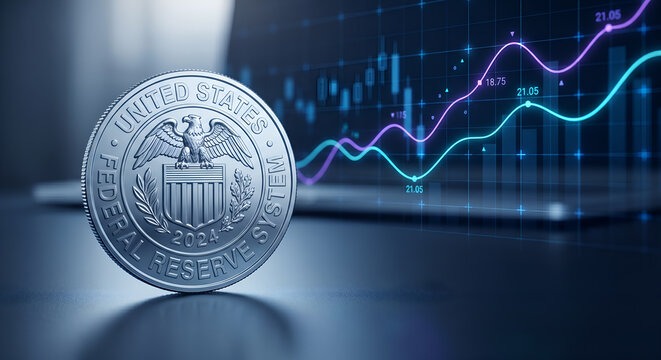
A decision made in a meeting room in Washington, D.C., can eventually reach your kitchen table.
It can change the monthly payment on a new mortgage, increase the cost of carrying credit card debt, improve the return on a savings account, influence stock prices, and even affect how confidently American companies hire new employees.
That decision is often described with one simple sentence: the Federal Reserve raised interest rates.
But the reality is more complicated. The Fed is not trying to make life more expensive for ordinary Americans. When it raises rates, it is usually trying to prevent inflation from damaging the economy even more deeply.
The difficult part is that the medicine can hurt before the economy begins to heal.
What Does the Federal Reserve Actually Do?
The Federal Reserve is the central bank of the United States. Its monetary policy responsibilities are commonly described through a dual mandate: promoting maximum employment and stable prices.
Those goals can sometimes pull in opposite directions.
When economic activity is weak and unemployment is rising, the Fed may lower interest rates to encourage borrowing, investment, and spending.
When inflation is too high, the Fed may raise rates to slow demand and reduce pressure on prices.
The Federal Open Market Committee, known as the FOMC, makes key U.S. monetary policy decisions. One of its most closely watched decisions involves the target range for the federal funds rate.
What Is the Federal Funds Rate?
The federal funds rate is the rate banks charge one another for overnight loans.
Most Americans never borrow money at this rate directly. You will not see a “federal funds rate” listed on your mortgage statement or credit card bill.
However, changes in this rate can spread throughout the financial system. They influence other short-term rates, credit conditions, long-term interest rates, business investment, consumer spending, employment, and inflation.
Think of the federal funds rate as the first domino.
The Fed moves one important rate, and financial markets, banks, lenders, businesses, and consumers respond in different ways.
Why Does the Fed Raise Interest Rates?
The main reason is usually inflation.
Inflation happens when prices across the economy rise over time. A moderate level of inflation is normal, but persistently high inflation reduces purchasing power.
A paycheck may stay the same while groceries, rent, insurance, transportation, and everyday services become more expensive.
High inflation does more than raise prices. It makes planning difficult.
Families become unsure how far their income will stretch. Businesses struggle to estimate future costs. Retirees worry about whether their savings will maintain their value. Lenders may demand higher rates to compensate for uncertainty.
Inflation quietly changes the meaning of every dollar. The number printed on the bill stays the same, but what that bill can buy begins to shrink.
Higher Rates Are Designed to Reduce Demand
When borrowing becomes more expensive, households and businesses often become more cautious.
A family may delay purchasing a home. A driver may keep an older vehicle instead of financing a new one. A business may postpone opening another location because the loan is no longer affordable.
As spending and investment slow, demand across the economy may weaken.
Businesses then face less pressure to raise prices rapidly. Supply chains may have more time to recover, labor demand may become less intense, and inflation may gradually cool.
The Fed does not directly control the price of food, gasoline, rent, or insurance. It tries to influence the broader financial conditions that shape spending and demand.
The Trade-Off: Slowing Inflation Without Breaking the Economy
Raising rates is a balancing act.
If the Fed does too little, inflation may remain high or become harder to control.
If it raises rates too aggressively, borrowing and spending may slow so much that businesses reduce investment, hiring weakens, unemployment rises, and the economy enters a recession.
This is why monetary policy often feels frustrating.
Its effects are not immediate, and the outcome is never perfectly predictable. A rate increase today may take months to influence American households and businesses fully.
The Fed is steering an enormous economy using tools that work gradually. It cannot tap the brakes without millions of people feeling some of the pressure.
How Higher Rates Affect Credit Cards
Credit cards are often among the first places Americans feel higher interest rates.
Many credit cards have variable annual percentage rates, or APRs. Those rates are commonly connected to the prime rate plus an additional margin determined by the card issuer.
The Federal Reserve does not set the prime rate directly, but banks often adjust it partly in response to changes in the federal funds rate.
For example, imagine carrying a $6,000 credit card balance.
When the APR rises, a larger portion of your monthly payment goes toward interest rather than reducing the original balance. If you continue making only minimum payments, the debt may take longer and cost substantially more to eliminate.
This is why rising-rate periods can be especially dangerous for revolving credit card debt.
The purchase has already happened. The object may already be forgotten. But the interest continues charging rent for money that was spent in the past.
How Higher Rates Affect Mortgages
The Fed does not directly determine mortgage rates.
Mortgage rates are influenced by several factors, including Treasury yields, inflation expectations, economic conditions, investor demand, and lender-specific risk.
Still, Fed policy can influence the broader interest-rate environment. When rates rise across the economy, obtaining a new mortgage often becomes more expensive.
Consider a homebuyer borrowing $350,000 with a 30-year fixed-rate mortgage.
Even a relatively small difference in the mortgage rate can change the monthly principal-and-interest payment by hundreds of dollars and add tens of thousands of dollars to the total cost over the life of the loan.
This affects more than affordability. Higher mortgage rates can reduce how much home a buyer qualifies for, change competition in local markets, and discourage existing homeowners with low fixed rates from selling.
However, someone who already has a fixed-rate mortgage generally will not see the rate on that loan change simply because the Fed raises rates.
The real pressure falls more heavily on new borrowers, people refinancing, and homeowners with adjustable-rate debt.
How Higher Rates Affect Auto Loans
Cars are another major financed purchase for American households.
When market rates rise, new auto loans may come with higher APRs. That can increase the monthly payment or force buyers to choose a less expensive vehicle, make a larger down payment, or extend the loan term.
A longer loan term may reduce the monthly payment, but it can also increase the total interest paid and leave the borrower owing more than the vehicle is worth for a longer period.
This is where affordability can become misleading.
A payment may fit inside the monthly budget while the total deal remains expensive. The smallest monthly number is not always the lowest financial cost.
How Higher Rates Affect Personal Loans and HELOCs
Personal loans may also become more expensive when interest rates rise, especially for borrowers with weaker credit profiles.
Home equity lines of credit, commonly called HELOCs, deserve particular attention because many have variable rates.
A homeowner may open a HELOC when rates are lower and assume the monthly cost will remain manageable. If the underlying benchmark rises, the interest rate and required payment may increase.
Borrowing against home equity can provide flexibility, but it also turns your house into collateral.
When rates are changing, understanding whether a loan is fixed or variable becomes more important than simply knowing the current payment.
Higher Rates Can Benefit Savers
Not every effect of higher interest rates is negative.
Banks and credit unions may offer better yields on:
High-yield savings accounts
Money market deposit accounts
Certificates of deposit
Treasury bills
Certain fixed-income investments
A saver who previously earned almost nothing on cash may begin receiving a more meaningful return.
However, banks are not required to increase deposit rates by the same amount or at the same speed as the Fed.
Some institutions raise savings yields aggressively to attract deposits. Others continue offering low rates because many customers never compare alternatives.
Higher rates create an opportunity, but only for savers willing to pay attention.
Loyalty to a bank can feel comfortable. Yet a familiar logo does not necessarily mean your money is receiving a competitive return.
What Higher Rates Mean for Bonds
Interest rates and existing bond prices generally move in opposite directions.
When newly issued bonds begin offering higher yields, older bonds paying lower rates become less attractive. Their market value may fall to compensate.
This can surprise investors who assume bonds never lose value.
A bond held until maturity may still return its face value, assuming the issuer does not default and the terms are honored. But a bond or bond fund sold before maturity may be worth more or less than its purchase price.
The effect often depends on duration. Longer-term bonds are generally more sensitive to interest-rate changes than shorter-term bonds.
Safety is never just about the name of an investment. It is also about the price paid, the time available, and the conditions under which the money may be needed.
What Higher Rates Mean for Stocks
Higher interest rates can create pressure on stock prices.
When borrowing becomes more expensive, companies may spend more on debt and reduce expansion. Consumers may purchase less. Future corporate profits can look less attractive when investors can earn better returns from lower-risk assets.
Growth companies may be especially sensitive because much of their expected value depends on profits projected far into the future.
However, the stock market does not react only to the rate increase itself.
Investors also consider:
Whether the increase was expected
What the Fed says about future policy
The strength of inflation
Corporate earnings
Employment conditions
The risk of recession
Changes in Treasury yields
Stocks can rise after a rate increase if investors believe the Fed is gaining control of inflation. They can also fall when rates stay unchanged if the Fed’s message suggests tighter policy ahead.
Markets react not only to what happened, but to how reality compares with expectations.
How Higher Rates Affect Jobs and Wages
When financing costs rise and consumer demand slows, businesses may become more cautious.
Some companies delay expansion, reduce hiring, cut overtime, or cancel new projects. If economic activity weakens significantly, layoffs may increase.
This is one reason the Fed cannot focus only on inflation.
Stable prices matter, but employment also matters. A policy strong enough to reduce inflation can become harmful if it creates an unnecessarily severe decline in jobs and income.
Inflation affects what a paycheck can buy. Unemployment removes the paycheck entirely.
The Fed’s challenge is to improve one problem without allowing the solution to create another.
What Americans Can Do When Rates Rise
You cannot control Federal Reserve policy, but you can adjust how your money responds to it.
Pay Down Variable-Rate Debt
Credit cards and other variable-rate balances can become increasingly expensive. Paying more than the minimum can reduce both the balance and future interest charges.
Compare Savings Rates
Review what your bank or credit union is paying. A high-yield savings account or competitive CD may offer a better return while keeping the money in an appropriate place for your goals.
For bank deposits, confirm that the institution is insured by the Federal Deposit Insurance Corporation. Credit union members should look for coverage through the National Credit Union Administration.
Review Fixed and Variable Loans
Know which debts have fixed rates and which can adjust.
A fixed-rate mortgage may remain unchanged, while a HELOC, variable-rate credit card, or adjustable-rate mortgage may become more expensive.
Avoid Financing Based Only on the Monthly Payment
Compare the APR, loan term, fees, total interest, and total amount paid.
A lender can make an expensive purchase appear affordable by stretching the debt across more years.
Strengthen Your Emergency Fund
Higher borrowing costs make cash reserves more valuable.
Without emergency savings, an unexpected expense may force you to use high-interest credit at exactly the wrong time.
Continue Investing With a Long-Term Plan
Rate changes can produce market volatility, but abandoning a diversified long-term strategy because of one Fed meeting may create a different kind of risk.
Your investment decisions should reflect your goals, timeline, and risk tolerance—not a single headline.
Will Prices Fall When the Fed Raises Rates?
Not necessarily.
The Fed usually aims to slow the rate at which prices are increasing, not force prices across the economy back to their previous levels.
If inflation falls from 7% to 2%, prices are generally still rising—just much more slowly.
This distinction matters because people often hear that inflation is improving while noticing that groceries, rent, and insurance remain expensive.
Both can be true.
Lower inflation does not automatically reverse the price increases that already happened. It means future increases may become less severe.
Why the Fed Sometimes Cuts Rates Again
The Fed may begin lowering rates when inflation is moving toward a more acceptable level and economic growth or employment appears too weak.
Lower rates can make borrowing less expensive, encourage spending and investment, and support economic activity.
But rate cuts are not always a celebration.
Sometimes the Fed lowers rates because the economy is weakening. A cheaper mortgage means less if the borrower is worried about losing a job.
No interest-rate decision is purely good or bad. Its meaning depends on why it happened and what condition the economy was already in.
The Real Meaning of a Rate Increase
A Federal Reserve rate increase is not simply a technical event for economists and Wall Street.
It changes incentives throughout American life.
It encourages borrowing to slow and saving to become more attractive. It asks consumers to become more selective, businesses to become more cautious, and markets to reconsider the value of future growth.
For families already carrying expensive debt, that adjustment can feel punishing. For savers, it may finally create better opportunities. For investors, it can bring volatility. For workers, it can create uncertainty.
The Fed raises interest rates because uncontrolled inflation can quietly weaken an entire economy.
But controlling inflation comes with a cost, and that cost is not experienced equally.
Understanding monetary policy will not prevent rates from changing. It gives you something more useful: the ability to recognize what is happening before it appears in your next bill, loan offer, savings statement, or financial decision.
Money is rarely affected by only the choices we make personally. It also moves through systems much larger than us.
Financial awareness begins when we understand both.
Continue Reading
Finance Atlas
Demystifying global markets, compounding structural wealth.
Sitemap
Home
Articles
Categories
About
Contact
Privacy
© 2026 Finance Atlas-Independent financial intelligence.
Institutional Authority. Clear Utility.