When the Market Falls, Most People Change Their Plan
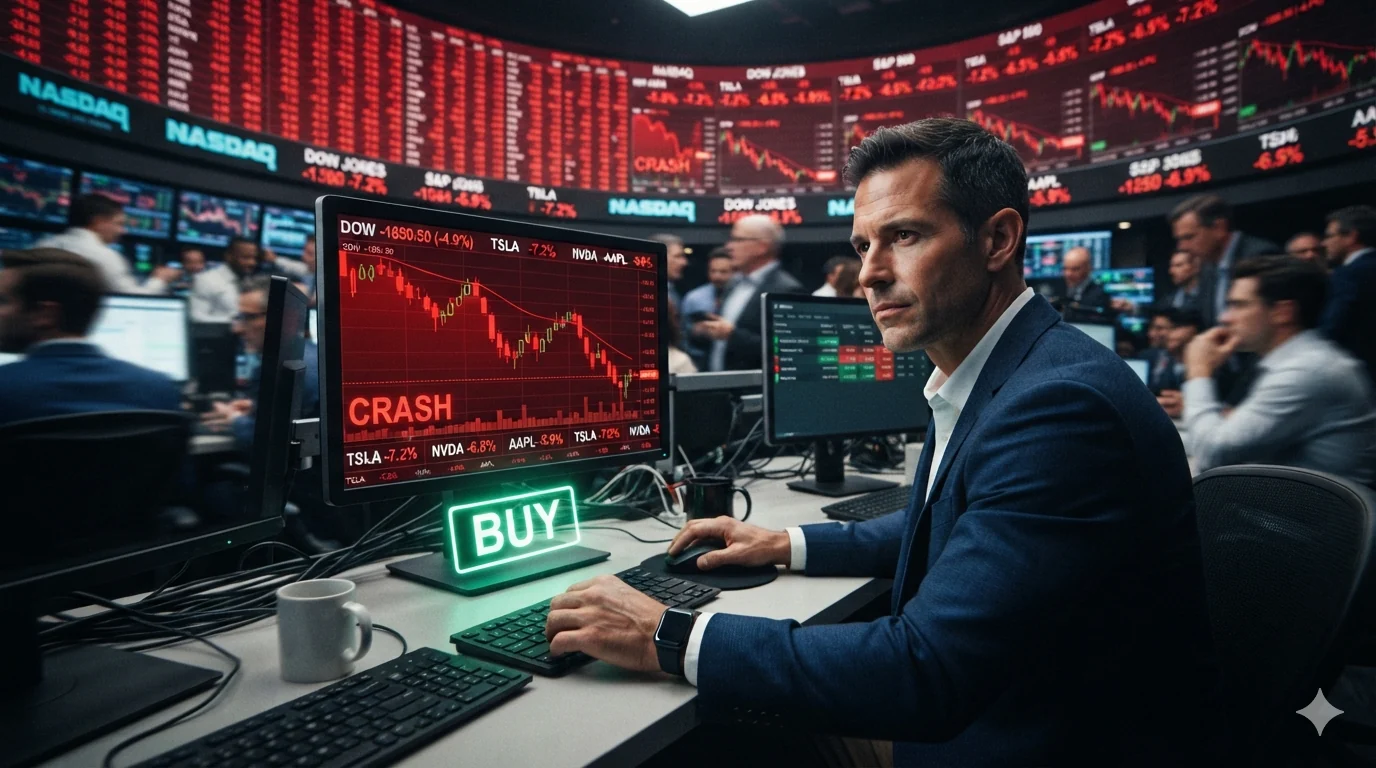
A market crash can make even experienced investors uncomfortable. Red numbers dominate financial news, pessimistic headlines become impossible to ignore, and every decline seems to invite another prediction that things will get even worse.
It's during these moments that many people abandon the investment strategy they felt confident about just weeks earlier. Selling feels like taking control, even if it means locking in losses.
The wealthiest investors tend to react differently.
They don't enjoy seeing their portfolios decline any more than anyone else. The difference is that they understand falling prices and permanent losses are not the same thing. That distinction changes almost every decision they make during a market downturn.
They See Stocks as Ownership, Not Lottery Tickets
Many beginners view stocks as numbers moving across a screen.
Wealthy investors usually see something else.
Every share represents ownership in a real business—one that employs people, sells products, generates revenue, and, in many cases, continues operating successfully even while its stock price is falling.
If a company remains financially strong, a lower share price doesn't necessarily mean the business has become worse.
Sometimes it simply means fear has become more expensive than logic.
That mindset makes market crashes look less like disasters and more like temporary sales on businesses they already wanted to own.
They Know Market Crashes Are Nothing New
Every generation believes its financial crisis is unique.
In many ways, it is.
The causes change. The headlines change. The industries affected change.
What hasn't changed is the market's long-term ability to recover.
History has been shaped by recessions, banking crises, wars, inflation, pandemics, and countless unexpected events. Yet despite those setbacks, the broader U.S. stock market has repeatedly reached new highs over the long run.
Wealthy investors don't ignore history.
They rely on it to remind themselves that fear is often temporary, while quality businesses can continue creating value for decades.
Cash Gives Them the Ability to Act
One reason wealthy investors often buy during market crashes is surprisingly simple.
They've prepared for the opportunity.
Many maintain cash reserves or liquid investments specifically because they know attractive buying opportunities eventually appear. When prices decline sharply, they don't need to sell existing investments or borrow money just to participate.
Preparation creates flexibility.
It also removes much of the emotional pressure that causes other investors to panic.
A market crash rewards those who planned for uncertainty long before uncertainty arrived.
They Focus on Value Instead of Headlines
Financial news is designed to report what happened today.
Successful investors usually care much more about what a business could become years from now.
When stock prices fall, they ask different questions.
Has the company's competitive advantage changed?
Are customers leaving?
Has the business model become weaker?
Or is the market simply reacting emotionally to short-term uncertainty?
If the business remains fundamentally healthy while the price becomes significantly lower, many experienced investors see an opportunity rather than a warning.
Price changes every second.
Value usually changes much more slowly.
They Keep Investing Even When It Feels Uncomfortable
Buying during a bull market is easy.
Buying after a market has fallen 20% or 30% feels completely different.
That's exactly why so many people struggle to do it.
Wealthy investors understand that the best opportunities rarely arrive when everyone feels optimistic. They often appear when uncertainty is at its highest and confidence is in short supply.
That doesn't mean they buy blindly.
It means they continue following their investment plan instead of allowing emotions to replace it.
Consistency becomes a competitive advantage because so few investors maintain it during difficult times.
They Think in Decades, Not Headlines
One of the biggest differences between wealthy investors and everyone else isn't intelligence.
It's time horizon.
Someone investing for the next thirty years views a market correction very differently from someone worried about next month's account balance.
Temporary declines become much less intimidating when measured against decades of potential growth.
This perspective doesn't eliminate risk.
It simply places today's volatility in the context of a much longer journey.
The market's daily movements become less important than the long-term direction of great businesses.
They Understand That Timing Is Nearly Impossible
Many investors delay buying because they hope prices will fall even further.
Sometimes they do.
Sometimes the market begins recovering before anyone expects.
The problem is that nobody consistently identifies the exact bottom.
Rather than waiting for the perfect moment, wealthy investors often invest gradually over time. This approach reduces the pressure of trying to predict short-term market movements while ensuring they continue participating as markets recover.
Their goal isn't to buy at the absolute lowest price.
It's to avoid missing years of future growth while waiting for a moment that may only become obvious in hindsight.
Wealth Is Built During Uncomfortable Moments
Looking back, every major market recovery seems obvious.
Living through one never does.
When prices are falling, buying feels risky.
Years later, those same purchases often appear remarkably well timed.
That's one of investing's greatest paradoxes.
The opportunities that create long-term wealth rarely feel comfortable when they first appear.
The investors who consistently build wealth aren't immune to fear.
They've simply learned that fear is a poor guide for making long-term financial decisions.
Market Crashes Reward Preparation More Than Courage
People often assume wealthy investors become richer during market crashes because they're willing to take bigger risks.
In reality, many become richer because they spent years preparing for moments exactly like these.
They maintain diversified portfolios, avoid making emotional decisions, keep sufficient liquidity, and focus on the long-term value of businesses instead of the market's short-term mood.
Crashes don't create those habits.
They reveal them.
When uncertainty arrives, preparation matters far more than prediction. And while no one welcomes a market crash, history has repeatedly shown that investors who continue buying quality assets during periods of widespread fear often give themselves the best chance of building lasting wealth over time.
Sources
Berkshire Hathaway — Annual Shareholder Letters
Investor.gov — Investing Basics
Vanguard — Market Volatility and Long-Term Investing
This article was written by the owner of Finance Atlas. The information presented was researched using the authoritative sources listed above.
Continue Reading