The $330 Investment That Could Become More Than $1 Million
Apple went public on December 12, 1980, at $22 per share.
Imagine an investor who purchased just 15 shares at the IPO.
Initial investment: $330.
Apple has since completed five stock splits: three 2-for-1 splits, one 7-for-1 split, and one 4-for-1 split. Those original 15 shares would therefore have become 3,360 shares today. Apple itself calculates its IPO price at roughly $0.10 per share on a split-adjusted basis.
With Apple trading around $304.80 on August 11, 2026, those 3,360 shares would be worth approximately:
$1.02 million.
And that calculation does not include the additional effect an investor could have received from dividends over the years.
A $330 investment turning into more than $1 million sounds almost absurd in hindsight.
But the investor would have needed to survive nearly half a century of reasons to sell.
That is the part of Apple's stock-market story that matters most.
Investors Were Not Buying Today's Apple
Looking at Apple now creates a dangerous illusion.
Today, investors see one of the world's largest companies, an enormous ecosystem of devices and services, one of the most recognizable brands on Earth, and a market capitalization measured in trillions of dollars.
The investor buying Apple in 1980 saw none of that.
There was no iPhone.
No iPad.
No App Store.
No Apple Watch.
No trillion-dollar valuation.
The company still had to survive fierce competition, leadership turmoil, technological shifts, product failures, and periods when its future looked far less certain than it does in retrospect.
Long-term investors were rewarded not because Apple's eventual dominance was obvious.
They were rewarded because the business became dramatically more valuable than it had been when they bought it.
That distinction is important.
Stocks do not create wealth merely because enough years pass.
The underlying company has to create something customers value.
Apple did that repeatedly.
The iPhone Changed the Economics of the Company
The Mac established Apple.
The iPod helped revive it.
But the iPhone transformed its economic scale.
Apple stopped being primarily a personal-computer company and became the center of a much larger consumer-technology ecosystem.
An iPhone customer could later buy AirPods, an Apple Watch, a Mac or an iPad. The same customer could use iCloud, Apple Music, the App Store and other services.
Each successful product strengthened the usefulness of others.
That created something far more powerful than a collection of gadgets: an ecosystem that made Apple increasingly difficult to replace in customers' everyday lives.
The scale remains enormous. In its fiscal third quarter of 2026, Apple reported $109.4 billion in quarterly revenue, up 16% from the previous year, while its installed base of active devices reached another record high.
Long-term shareholders ultimately benefited because Apple kept finding new ways to turn customer loyalty into revenue and profit.
Stock Splits Did Not Create the Wealth
Apple's stock splits are visually dramatic.
One original share eventually became 224 shares through the company's five splits.
But splits themselves did not make investors richer.
If you own one share worth $1,000 and it undergoes a 4-for-1 split, you now own four shares worth roughly $250 each.
You still have $1,000.
The wealth came from what happened between those splits.
Apple sold more products.
Revenue expanded.
Profits grew.
The company's competitive position strengthened.
Investors became willing to value the entire business at increasingly larger amounts.
The splits simply made each individual share smaller while increasing the number of shares investors owned.
They changed the packaging.
The company changed the value.
Holding Apple Was Much Harder Than the Chart Makes It Look
Historical stock charts have a peculiar ability to erase fear.
A line traveling from the bottom left toward the top right makes long-term investing look effortless.
Real investors did not experience Apple that way.
They experienced uncertainty.
Apple nearly collapsed in the 1990s.
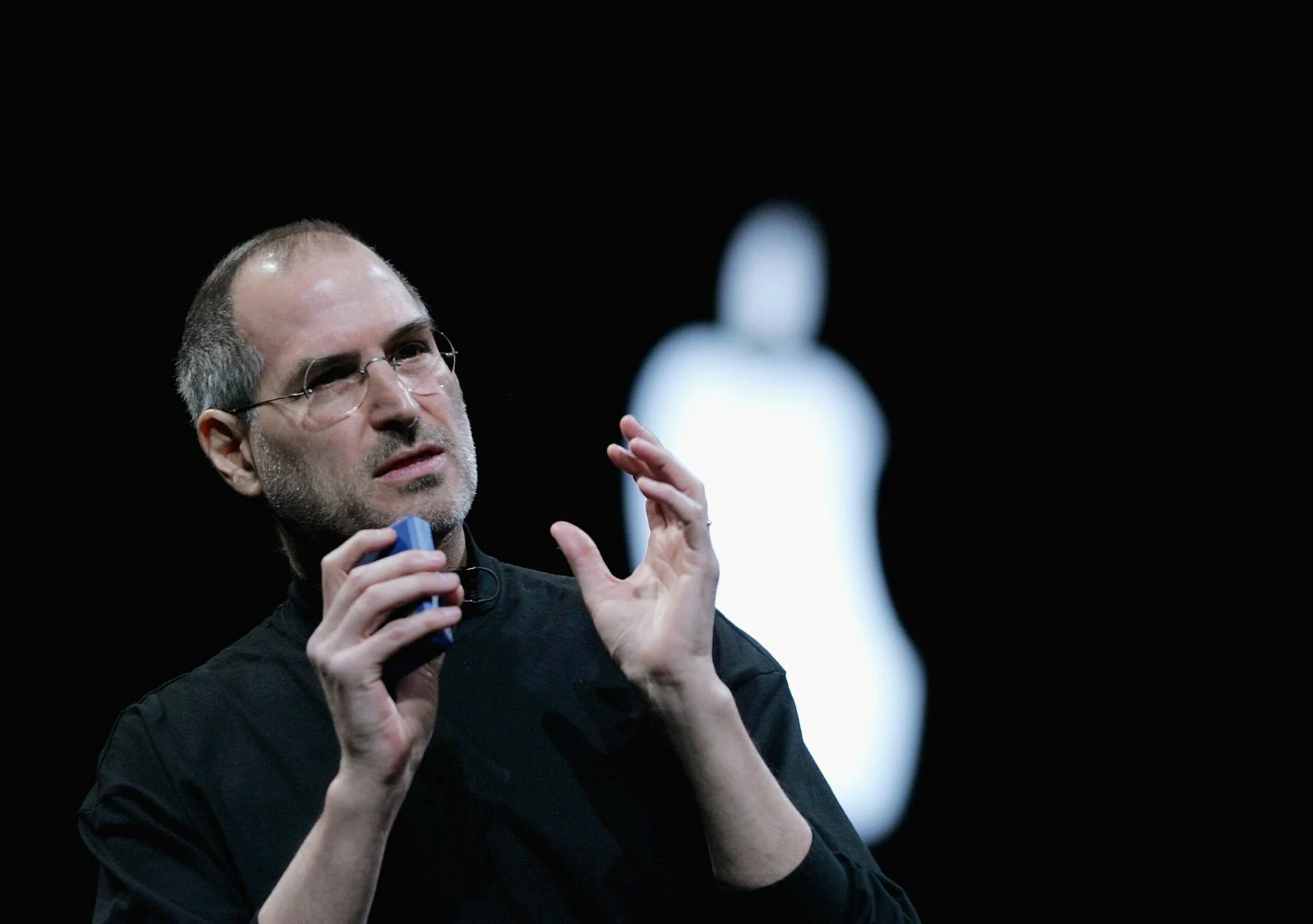
Steve Jobs eventually returned.
The company reinvented itself.
The dot-com crash came.
Then the financial crisis.
Jobs died in 2011.
Investors questioned whether Apple could continue innovating without him.
There were concerns about slowing iPhone growth, competition from Android manufacturers, supply-chain disruptions, regulation, China, economic downturns and changing technology.
Even today, Apple warns investors that it operates in highly competitive markets and must continually introduce and improve products and services to maintain demand.
The investor who turned hundreds or thousands of dollars into millions did not simply choose Apple correctly once.
They had to continue choosing not to sell through years when selling looked completely reasonable.
That psychological challenge is easy to underestimate.
Apple Started Returning Enormous Amounts of Cash to Shareholders
As Apple matured, shareholder returns gained another engine.
Buybacks.
When a company repurchases its own stock, the number of shares outstanding can decline. If the business continues producing strong profits, each remaining share represents a larger proportional ownership interest than it otherwise would.
Apple has spent extraordinary sums doing this.
During fiscal 2025 alone, the company repurchased 402 million shares for $89.3 billion.
Apple also pays a cash dividend.
Neither guarantees future stock returns, and buybacks can destroy value if a company pays excessively high prices for its own shares.
But for long-term Apple shareholders, the combination of business growth, dividends, and enormous repurchase programs has added another dimension to the wealth-creation story.
Apple was no longer simply generating cash.
It was returning enormous amounts of that cash to its owners.
The Millionaire Math Becomes Almost Uncomfortable
Return to the original example.
Fifteen Apple shares at the IPO would have cost approximately $330.
After all five splits, they would represent 3,360 shares.
At roughly $304.80 per share on August 11, 2026, that position would be worth approximately $1,024,128.
Now imagine 100 original shares.
Cost in 1980:
$2,200.
Shares after splits:
22,400.
Approximate value at the same 2026 share price:
$6.83 million.
Again, these figures exclude taxes, transaction costs, and the effect of dividends, and almost nobody should interpret them as evidence that buying today's promising company will reproduce Apple's extraordinary historical return.
They demonstrate something different.
When a business increases its economic value by several orders of magnitude, early shareholders who maintain their ownership can experience equally extraordinary results.
The challenge is that nobody knows which company will become the next Apple beforehand.
Survivorship Bias Is the Part Investors Cannot Ignore
Apple's story can teach a dangerous lesson if interpreted incorrectly.
It is easy to look backward and conclude:
“Just find a great company and hold it forever.”
But history contains thousands of companies that once looked promising and never became Apple.
Some stagnated.
Some were disrupted.
Some went bankrupt.
Apple itself once looked vulnerable enough that long-term success was anything but guaranteed.
That is why the lesson should not be that every investor needs to find the next Apple and put everything into it.
Concentrated investing can create spectacular wealth when the choice is right.
It can also create spectacular losses when it is wrong.
Diversification sacrifices some of the upside that comes from owning only the greatest winner, but it also reduces the possibility that one failed prediction destroys an investor's financial future.
The Apple story is exceptional precisely because Apple's outcome was exceptional.
The Real Lesson Behind Apple's Millionaires
The most interesting thing about Apple investors who became millionaires is not that they owned thousands of shares in 2026.
It is how few shares some of them needed to begin with.
The enormous ending balance came from the distance between what Apple was worth when those shares were purchased and what the business eventually became.
But time alone was not enough.
Apple had to keep creating.
The Mac became the iPod era.
The iPod era became the iPhone era.
Hardware expanded into an ecosystem.
Services added recurring revenue.
Cash generation supported dividends and enormous share repurchases.
And throughout that transformation, shareholders who refused to constantly interrupt their ownership continued participating in the company's increasing value.
That is what long-term investing looks like when almost everything goes right.
It is also why the story cannot be reduced to “buy and hold.”
The real formula was more demanding:
Buy ownership in an exceptional business, survive uncertainty, allow the business to compound its economic value, and resist selling simply because the journey becomes uncomfortable.
Apple turned some long-term investors into millionaires.
But the fortune was not created by a stock ticker.
It was created by the business behind it, and by investors patient enough to remain owners while that business changed the world.
In After Steve, Tripp Mickle explores how Apple continued evolving after Steve Jobs, including the leadership and strategic changes that helped push the company into the trillion-dollar era. For readers fascinated by what happened inside the business while Apple's shareholders were watching their investment grow, it offers a compelling deeper look at the company behind the stock.
Sources
Apple Investor Relations — Frequently Asked Questions and Stock Split History
Apple — Fiscal 2026 Third Quarter Results
U.S. Securities and Exchange Commission — Apple 2025 Form 10-K
This article was written by the owner of Finance Atlas. The information presented was researched using the authoritative sources listed above.
Continue Reading