He Did Not Invent Starbucks. He Saw What Starbucks Could Become.
Howard Schultz did not create Starbucks.
His achievement was recognizing that the company he joined could become something its original owners had never intended to build.
In the early 1980s, Starbucks was primarily a Seattle retailer of high-quality coffee beans and equipment. Schultz joined the company in marketing and operations, but during a trip to Italy he encountered a completely different relationship with coffee.
Italian espresso bars were not simply places to purchase caffeine.
People stopped there.
They talked.
They knew the barista.
They stood at the counter over espresso.
The café existed somewhere between private life and professional life, a social environment built around a tiny cup of coffee.
Schultz returned to Seattle convinced that Starbucks could bring part of that culture to America.
The original owners were less convinced.
Starbucks experimented with espresso under Schultz in 1984, but the founders wanted the company to remain focused primarily on selling coffee beans. Schultz eventually left and started his own Italian-inspired coffeehouse company, Il Giornale, in 1985. By 1987, after building three locations, he raised $3.8 million and acquired Starbucks' name, roasting plant, and six Seattle stores. Il Giornale then adopted the Starbucks name.
That transaction became the starting point for one of the most successful consumer-brand expansions in modern business.
Schultz was no longer trying to sell Americans better coffee beans.
He was trying to change what going out for coffee meant.
The Product Was Coffee. The Business Was the Experience.
This distinction is the heart of the Starbucks story.
If Schultz had viewed Starbucks simply as a beverage company, the opportunity would have been limited.
Coffee is a commodity.
Beans can be purchased from many producers.
Competitors can buy espresso machines.
A rival can copy a latte.
A supermarket can sell coffee much more cheaply.
So Starbucks needed something harder to copy.
Schultz focused on the entire experience surrounding the drink.
The aroma when a customer walked through the door.
The barista making the beverage.
The cup in the customer's hand.
The music.
The furniture.
The lighting.
The names of the drinks.
The feeling that staying for 20 minutes was perfectly normal.
Starbucks eventually popularized the idea of the coffeehouse as a “third place”, somewhere between home and work where people could spend time, meet friends, read, work, or simply sit alone without needing a formal occasion.
That idea allowed Starbucks to compete on something much larger than the price of coffee.
A customer was not paying only for beans, milk, water, and a paper cup.
They were paying for a small experience embedded in the middle of the day.
That changed the economics.
Starbucks Made an Ordinary Purchase Feel Premium
Before Starbucks became ubiquitous, spending several dollars on an individualized coffee drink was far less routine for many American consumers than it would later become.
Schultz helped normalize that behavior.
The company did it partly through language.
Coffee became espresso.
Milk became part of cappuccinos and lattes.
Drink sizes had their own vocabulary.
Customers customized beverages.
A simple morning purchase started to feel personal.
This is one of the cleverest things Starbucks accomplished.
Luxury usually involves expensive products purchased infrequently.
Starbucks created something closer to affordable luxury.
A customer might not be able to purchase a designer handbag every week.
They could buy a premium coffee every morning.
The purchase was small enough to repeat frequently but premium enough to feel different from ordinary coffee.
Frequency made the model powerful.
A $5 purchase is not especially impressive.
A $5 purchase repeated hundreds of times by millions of people becomes an empire.
The Real Breakthrough Was Turning Coffee Into a Habit
The strongest consumer businesses often become part of a routine.
You do not wake up every morning and carefully evaluate every possible toothpaste brand.
You do not conduct market research before choosing where to buy lunch every afternoon.
Habit removes decision-making.
Starbucks became exceptionally good at occupying one of the most valuable moments in the consumer day:
the morning routine.
Drive to work.
Stop at Starbucks.
Order the same drink.
Continue with the day.
The more predictable the experience became, the easier that habit was to repeat.
That required something extremely difficult for a rapidly expanding restaurant business:
consistency.
A Starbucks in Chicago could not feel completely disconnected from one in Seattle.
Customers expected recognizable drinks, recognizable branding, recognizable service, and recognizable stores.
Local differences could exist, but the customer needed confidence that the Starbucks name meant something.
That trust turned the logo itself into an asset.
Eventually, people did not need to inspect the menu before walking inside.
They already knew approximately what experience awaited them.
Schultz Understood That Employees Were Part of the Product
Starbucks could design beautiful stores and buy premium coffee, but one variable stood directly between the company and every customer:
the person behind the counter.
Schultz called Starbucks employees partners, language that reflected his belief that the workforce should feel connected to the company rather than treated as interchangeable labor.
Starbucks says that in 1988 it became the first major retailer to offer health benefits to eligible full-time and part-time employees. Three years later, Schultz introduced a stock-ownership program that gave employees an opportunity to participate financially in the company's growth.
The philosophy had a business purpose.
A coffeehouse is a human business.
The customer interacts with the barista.
The barista remembers the order.
The barista controls part of the atmosphere Schultz was trying to sell.
If employees hate working there, customers eventually feel it.
Schultz therefore viewed employee experience and customer experience as connected.
That did not mean Starbucks permanently solved the difficult economics of retail employment. The company has faced labor disputes, unionization campaigns, scheduling concerns, wage pressures, and criticism over working conditions.
But the original insight was powerful:
If human connection is part of what customers are buying, employees cannot be treated as irrelevant to the brand.
Expansion Created a Beautiful Economic Machine
Once Starbucks proved that customers would repeatedly pay premium prices for specialty coffee, expansion became the next engine.
Open another store.
Build awareness.
Create more convenience.
Generate more sales.
Use the larger network to strengthen purchasing, marketing, logistics, and brand recognition.
Then open more stores.
But the physical network did something more interesting.
Every new Starbucks also advertised every other Starbucks.
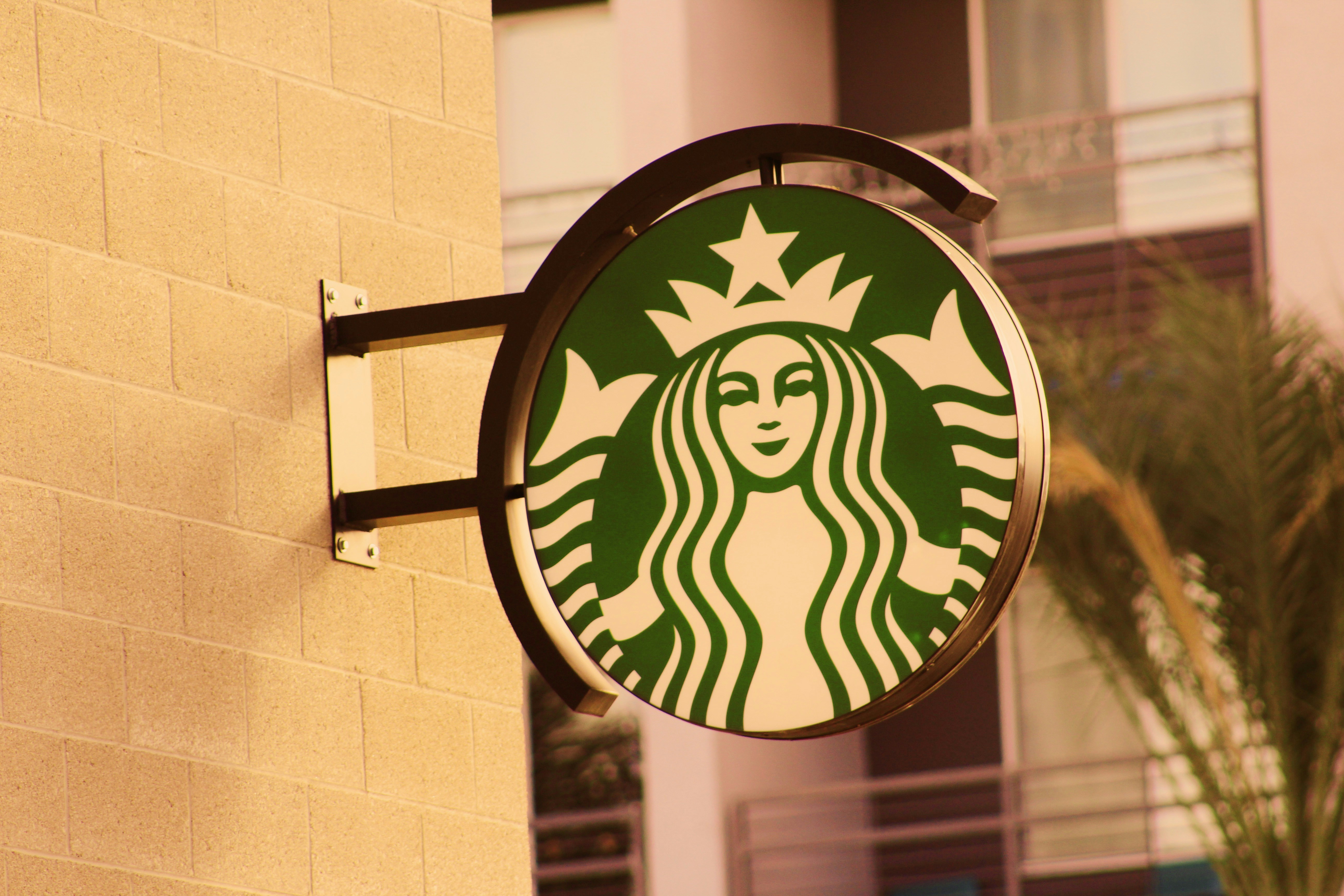
A traveler seeing the green siren in an unfamiliar city instantly recognized it.
The company became safer to choose precisely because it became common.
That is a subtle competitive advantage.
An independent café might produce extraordinary coffee.
But the customer walking through an airport, shopping district, or unfamiliar neighborhood may not know what the independent shop will deliver.
Starbucks reduced uncertainty.
The customer already knew the vocabulary.
Already knew the drinks.
Already knew the approximate experience.
Scale turned familiarity into marketing.
Starbucks Was Selling Consistency Across Geography
Global expansion introduces a problem most local businesses never face.
Cultures are different.
Consumer tastes are different.
Real estate is different.
Labor markets are different.
Coffee traditions are different.
A company can either standardize everything and risk feeling foreign, or localize everything and risk losing its identity.
Starbucks had to do both.
The core brand remained recognizable.
The siren.
The espresso drinks.
The coffeehouse atmosphere.
The barista.
The cup.
But products and store formats could adapt to local markets.
This balance allowed Starbucks to become global without making every store feel completely detached from its location.
The irony is particularly striking in Italy.
Schultz's original inspiration came from Italian coffee bars, yet Starbucks did not open its first Italian location until 2018, decades after the idea inspired him. Starbucks still describes its 1983 Milan experience as the moment that helped reshape the company's future.
The inspiration traveled from Italy to Seattle, became an American corporation, expanded around the planet, and eventually returned to Italy as Starbucks.
Few business stories make a cleaner circle.
The Store Network Became a Competitive Moat
As Starbucks expanded, location itself became a strategic advantage.
A coffee shop needs customers.
Starbucks could increasingly place stores where customers already moved:
downtown areas.
Shopping centers.
Airports.
College campuses.
Highways.
Office districts.
Hotels.
Supermarkets.
Busy suburban intersections.
Drive-thru locations expanded convenience even further.
Then licensed stores allowed Starbucks to appear inside places where operating every store directly would not necessarily make sense.
By the end of Starbucks' fiscal third quarter of 2026, the company reported 41,304 stores globally, with 33% company-operated and 67% licensed. Nearly 23,000 of those stores were outside North America.
That footprint is one of the clearest measures of what Schultz ultimately helped build.
The small Seattle business he bought with six stores became a network spanning tens of thousands of locations.
Starbucks Eventually Became Much More Than Its Stores
Another brilliant part of the expansion was realizing the Starbucks brand did not need a Starbucks building around it.
Coffee beans could be sold in supermarkets.
Ready-to-drink beverages could appear in refrigerators.
Packaged products could enter homes.
Coffee pods could reach customers who might never visit a café that day.
The brand expanded from a physical destination into a consumer product.
This matters because stores are expensive.
They require rent.
Labor.
Furniture.
Utilities.
Equipment.
Maintenance.
A recognizable consumer brand can generate value in other distribution channels without reproducing the entire café environment every time.
Starbucks therefore built two complementary forms of power.
The coffeehouses created the brand.
The brand created opportunities outside the coffeehouses.
Digital Technology Made the Habit Even Harder to Break
Schultz built the original empire around physical stores, but Starbucks later discovered that technology could make its already powerful habit loop even stronger.
Mobile ordering reduced friction.
Digital payments made purchases faster.
Rewards gave customers another reason to return.
Stored balances kept Starbucks inside the customer's financial routine.
Personalized offers encouraged additional visits.
The physical coffee shop increasingly gained a digital layer.
This was strategically important because convenience is one of the strongest enemies of customer experimentation.
If your favorite Starbucks order is already inside an app, payment is stored, rewards are accumulating, and a store sits on your route to work, trying another coffee shop requires more effort.
Individually, none of those barriers is enormous.
Together, they create stickiness.
The empire became not only a network of locations but a network of routines.
Schultz Nearly Lost the Experience He Had Created
The danger of extreme expansion is that eventually the machine can begin destroying the reason customers liked it in the first place.
Starbucks encountered exactly that problem.
As the company opened more locations and emphasized efficiency, Schultz became concerned that the coffeehouse experience was becoming commoditized.
Stores could feel too automated.
Growth could become more important than craft.
The aroma, theater, and human connection that originally differentiated Starbucks risked disappearing beneath operational scale.
This illustrates one of the hardest problems in consumer business.
The processes that create scale can also sterilize the experience.
A company wants speed because speed increases throughput.
It wants standardization because standardization reduces mistakes.
It wants automation because automation lowers complexity.
But if customers originally loved the imperfections and human character of the experience, efficiency can go too far.
Starbucks has repeatedly wrestled with this tension.
Even in 2026, management's “Back to Starbucks” strategy emphasized restoring the coffeehouse as a community-oriented third place while improving service and financial performance.
Decades after Schultz introduced the concept, the company is still trying to protect it.
That shows how central the idea became.
The Empire Was Never Really About Coffee Alone
Coffee mattered.
Quality mattered.
Roasting mattered.
But excellent coffee by itself does not explain more than 41,000 locations.
The deeper genius of Starbucks was combining several things consumers valued into one repeatable system.
Product: premium coffee and customized beverages.
Place: an environment where customers could spend time.
Status: a recognizable cup that carried cultural meaning.
Habit: a purchase easy to repeat every day.
Convenience: stores positioned along everyday routes.
Consistency: confidence that the experience would be familiar.
Human connection: baristas and coffeehouse culture.
Scale: thousands of locations making the brand increasingly visible.
Each reinforced the others.
This is why copying Starbucks has never been as simple as making a better latte.
Competitors can copy the drink.
Replicating the entire system is much harder.
There Was a Price for Becoming Everywhere
Starbucks' extraordinary scale also created vulnerabilities.
A brand can become so common that it stops feeling special.
Premium prices attract competitors.
Large store networks create enormous fixed costs.
Coffee prices fluctuate.
Labor costs rise.
Consumers change habits.
Local coffee shops can compete on authenticity.
Fast-food chains can compete on price and convenience.
Economic downturns can make premium coffee feel less essential.
And global operations introduce political, currency, regulatory, and cultural risks that a small Seattle coffee company never had to consider.
China, for example, became one of Starbucks' most important markets, but increasing competition and changing economics eventually pushed the company toward a different structure. In 2026 Starbucks converted its China retail operations into a licensed joint venture while retaining a 40% ownership interest and ownership of the brand and intellectual property.
Building an empire is difficult.
Maintaining one is a different challenge.
Howard Schultz's Greatest Product Was Not the Frappuccino
It would be easy to tell the Starbucks story through drinks.
Espresso.
Latte.
Frappuccino.
Cold brew.
Pumpkin Spice Latte.
But none of them explains Schultz's real contribution.
His most important idea was psychological.
He understood that people could form an emotional relationship with a place built around an ordinary product.
Coffee existed for centuries before Starbucks.
Cafés existed for centuries before Starbucks.
Schultz's achievement was taking elements of European coffee culture, translating them for American consumers, standardizing the experience, and then scaling it with the discipline of a modern corporation.
The company turned coffee into a ritual.
The ritual became a habit.
The habit became revenue.
The revenue financed expansion.
Expansion made the brand more familiar.
Familiarity brought more customers.
More customers made further expansion easier.
That flywheel turned six Seattle stores into a global system.
The Starbucks Lesson Goes Far Beyond Coffee
Entrepreneurs often believe the path to building a huge company begins by creating a completely new product.
Starbucks demonstrates another possibility.
Take something people already buy.
Understand what is missing around it.
Then redesign the experience.
Schultz did not invent coffee.
He did not invent espresso.
He did not invent cafés.
What he recognized was that American consumers could be persuaded to experience all three differently.
That insight was worth vastly more than inventing another coffee bean.
The greatest businesses sometimes do not create new human needs.
They take old needs and satisfy them in a way customers did not realize they wanted until it becomes part of everyday life.
That is what Howard Schultz accomplished.
A cup of coffee became a destination.
The destination became a third place.
The third place became a brand.
And the brand became a global empire.
In Pour Your Heart Into It, Howard Schultz and Dori Jones Yang tell the Starbucks story from inside the company, including Schultz's early vision, the struggle to finance expansion, and his belief that a business could pursue enormous growth without treating people as an afterthought. For readers interested in how an ordinary product became an extraordinary brand, it is the natural next chapter after the story of Starbucks itself.
Sources
Starbucks — Il Giornale and the 1987 Starbucks Acquisition
Starbucks — Partners and Employee Culture
Starbucks Investor Relations — Q3 Fiscal Year 2026 Results
This article was written by the owner of Finance Atlas. The information presented was researched using the authoritative sources listed above.
Continue Reading