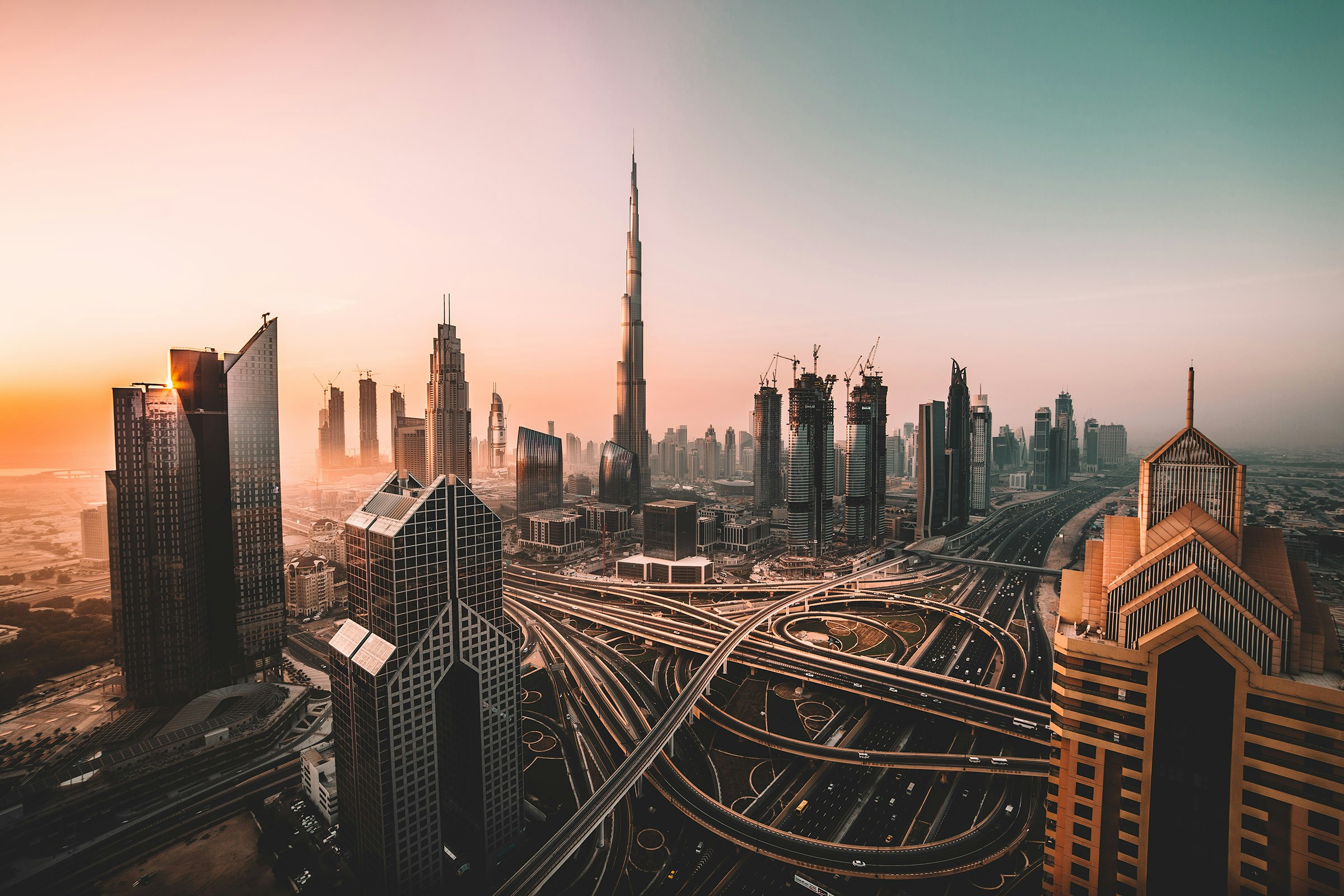
The Transformation of Dubai
Before the skyscrapers, luxury developments, and international banks, Dubai was a modest coastal settlement shaped by fishing, pearl diving, boat building, and trade. Its desert environment offered few obvious advantages, yet its position along the Arabian Gulf gave local merchants something valuable: access to the movement of people and goods. Dubai’s transformation began when its leaders stopped viewing geography as a limitation and started treating it as an opportunity.
Oil Provided Capital, Not the Entire Plan
Oil was discovered in Dubai in 1966, and exports began in 1969. The revenue helped finance roads, public services, ports, and other infrastructure that would have been difficult to build so quickly through traditional trade alone.
But Dubai never possessed the enormous oil reserves associated with some of its neighbors. That reality shaped its strategy.
Instead of building an economy that would remain dependent on petroleum, the government used early oil income to prepare for a future in which oil would matter less. The difference is subtle but important: Dubai did not simply spend its resource wealth. It used that wealth to build the foundations of other industries.
Oil helped start the transformation, but diversification made it last.
Infrastructure Came Before the Crowds
Many cities expand infrastructure only after congestion and demand become impossible to ignore. Dubai repeatedly took the opposite approach.
Ports, airports, roads, business districts, and logistics networks were developed with a future scale in mind. At the time, some of those projects appeared overly ambitious. Years later, they became the physical system connecting Dubai to international commerce.
Jebel Ali Port grew into the largest port in the Middle East, handling 15.5 million shipping containers in 2024. Dubai also became the world’s leading airport hub for international passenger traffic, while Emirates helped connect the city directly with markets across Europe, Asia, Africa, and the Americas.
The desert had not changed. Dubai had simply made distance less important.
A company could establish an office in the city, move goods through its ports, reach international customers by air, and operate between several major time zones. Geography became valuable because infrastructure made it usable.
Trade Created the First Global Identity
Long before finance became central to Dubai’s image, trade shaped its economic culture.
Merchants were welcomed, commercial activity was encouraged, and the city developed a reputation as an accessible regional marketplace. That openness mattered because financial centers rarely appear in isolation. They usually grow where companies, investors, goods, and professional services are already moving.
Dubai’s wholesale and retail sector contributed AED 112.1 billion to real GDP in 2024. Transportation and storage added AED 51.9 billion, supported by the city’s ports, aviation network, and free zones.
These sectors created more than revenue. They created relationships.
International businesses needed banks, insurance, legal services, investment firms, accountants, and advisors. Finance grew naturally around the commercial activity Dubai had already attracted.
The city did not begin by announcing that it would become a financial powerhouse. It first became a place where global business had practical reasons to operate.
Free Zones Reduced the Friction of Doing Business
Dubai understood that impressive buildings alone would not persuade international companies to stay.
Businesses also needed clear regulations, efficient licensing, access to foreign ownership, and an environment designed around international commerce. Specialized free zones were created to serve different industries, including logistics, technology, media, commodities, healthcare, and finance.
These zones reduced some of the administrative and ownership barriers that companies often face when entering a new market. They also allowed related businesses to gather in the same place, creating clusters of suppliers, clients, workers, and investors.
A financial firm entering Dubai was no longer arriving alone. It was entering an ecosystem.
This approach helped Dubai compete with cities that had much longer financial histories. It could not recreate centuries of tradition, but it could make establishing and operating a business faster and more attractive.
DIFC Gave Global Finance a Home
The creation of the Dubai International Financial Centre changed the scale of Dubai’s financial ambitions.
DIFC was designed as a dedicated environment for banks, investment managers, insurers, FinTech companies, family offices, and professional services firms. It connected global capital with opportunities across the Middle East, Africa, and South Asia.
By the first half of 2026, DIFC had surpassed 10,000 active registered companies for the first time. It was also home to 1,134 regulated financial services firms, making it the region’s largest and most diversified financial services ecosystem.
Numbers like these matter, but the network behind them matters more.
Financial centers become stronger when firms can find experienced employees, specialized lawyers, regulators, investors, and clients within the same environment. Each new company makes the location slightly more valuable to the next one.
That is how a business district becomes a financial center—and how a financial center gradually becomes difficult for competitors to reproduce.
Dubai Built an Economy Larger Than Its Oil Sector
The clearest evidence of Dubai’s transformation is found in the structure of its economy.
More than 95% of Dubai’s GDP is now generated by non-oil activities. In 2024, the emirate’s real GDP reached approximately $120.6 billion and grew by 3.2%. Trade, transportation, finance, real estate, tourism, manufacturing, and technology now carry far more economic weight than petroleum.
This does not mean Dubai has escaped every economic risk.
Its property market can experience sharp cycles. Tourism is sensitive to global disruptions. International capital can move quickly when conditions change. Rapid growth also creates pressure on housing, transportation, and the cost of living.
Still, diversification gives the city several engines instead of one.
When one sector slows, activity in another can provide support. That flexibility is one reason Dubai’s economy has repeatedly recovered from periods that exposed more specialized cities.
Ambition Became an Economic Policy
Dubai’s rise is sometimes described as though it were a collection of spectacular construction projects.
The buildings certainly helped attract attention, but attention alone does not create a financial powerhouse. Behind the skyline was a consistent pattern: set a target that appeared too large, build the infrastructure early, attract international expertise, and then expand the system around the demand that followed.
That pattern continues through the Dubai Economic Agenda D33, which aims to double the size of the city’s economy by 2033. The plan also targets higher foreign investment, greater international trade, stronger digital industries, and a place among the world’s leading financial centers.
Not every target is guaranteed to be reached. Ambitious plans rarely unfold exactly as expected.
But the strategy reveals something essential about Dubai: the city treats the future as something to be constructed rather than predicted.
The Desert Was Never the Real Obstacle
Dubai did not turn sand directly into wealth.
It turned oil revenue into infrastructure, infrastructure into trade, trade into international business, and international business into a growing financial ecosystem.
The desert makes the story visually dramatic, but the deeper transformation happened through decisions: welcoming merchants, building beyond immediate demand, reducing barriers for companies, and refusing to let one natural resource define the economy.
Plenty of places have oil. Plenty have ports, airports, or impressive skylines.
Dubai’s unusual achievement was combining those assets into a system that made global businesses want to arrive—and gave them reasons to remain.
The city became a financial powerhouse not because it discovered unlimited wealth beneath the ground, but because it built an economy designed to keep creating value above it.
Sources
Government of Dubai — About Dubai and Its Economic Transformation
Government of Dubai — Dubai Economy
Dubai International Financial Centre — H1 2026 Achievements
This article was written by the owner of Finance Atlas. The information presented was researched using the authoritative sources listed above.
Continue Reading