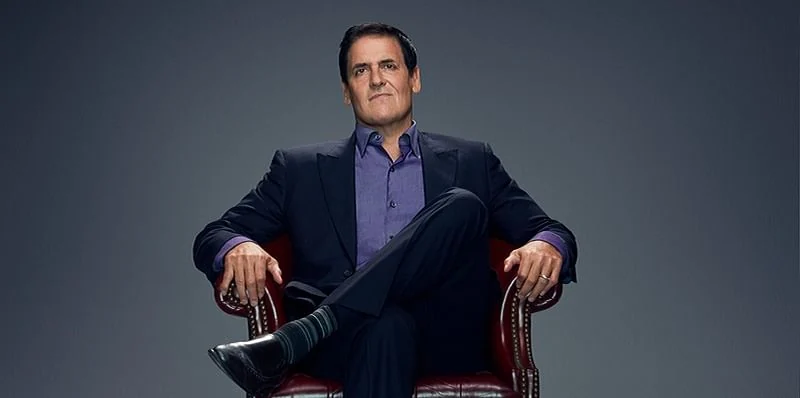
By the time Mark Cuban first appeared on Shark Tank in 2011, he was already known as a billionaire investor and owner of the Dallas Mavericks.
But television did not create his fortune.
Cuban became a millionaire in 1990, more than 20 years before he entered the Tank. His first major success came from a software business built during a period when he had little money, no comfortable safety net, and no guarantee that the technology industry would reward him.
The story is not really about one lucky company sale. It is about learning aggressively, recognizing a growing market, selling useful solutions, and refusing to spend success before it was secure.
He Had Been Selling Since Childhood
Cuban showed an interest in business long before he understood software. As a child, he sold garbage bags door to door. He also traded baseball cards, sold magazines, and operated a small stamp business as a teenager.
Those early projects did not make him wealthy, but they taught him something that would matter later: a business survives only when someone is willing to pay for what it offers.
Many entrepreneurs fall in love with an idea.
Cuban became interested in the customer.
That sales experience would eventually matter as much as his technical knowledge because MicroSolutions did not begin with a revolutionary invention. It began by helping businesses understand and use technology they found confusing.
Starting Over in Dallas
After graduating from Indiana University, Cuban moved to Dallas. According to his official biography, he lived with five roommates and slept on the floor in the corner of a bedroom.
He worked as a bartender before finding a sales position at Your Business Software, one of the city’s early computer software retailers. While working there, he learned how to install, support, and sell business technology.
Cuban was eventually fired after leaving the store’s opening responsibilities to another employee so he could meet a customer and complete a sale.
Losing the job could have sent him searching for another employer.
Instead, it pushed him toward the customers he had already learned how to serve.
Getting fired removed his income.
It also removed the reason to keep building someone else’s business.
MicroSolutions Began Without Much Money
Cuban started MicroSolutions immediately after losing his job.
He still had no proper office and little capital. His first major customer reportedly advanced him the money needed to purchase the software required for the project.
That arrangement reveals something important about early businesses: customers can sometimes provide the first source of financing when the founder solves a problem valuable enough to be paid for in advance.
MicroSolutions helped businesses purchase, install, and connect computer systems. Cuban spent years studying software and networking so he could understand the products better than competitors and explain them clearly to clients.
He did not begin as the person who knew everything.
He became valuable by learning faster than the customers could solve the problems themselves.
Sales Created the Opportunity
Technical ability helped MicroSolutions deliver its work, but sales allowed the company to grow.
Cuban understood that businesses were not purchasing software simply because computers were exciting. They wanted technology that could save time, connect employees, organize information, or improve operations.
That changed the conversation.
Instead of selling a complicated product, he could sell the result the product was supposed to create.
MicroSolutions grew from an apartment-based operation into a national systems integration company with 80 employees. Cuban’s official biography states that it reached nearly $36 million in annualized sales without experiencing a losing month.
Revenue did not appear because Cuban waited for the technology market to become obvious.
He entered while many companies still needed someone to explain why the technology mattered.
The Sale That Made Him a Millionaire
In 1990, CompuServe, then owned by H&R Block, acquired MicroSolutions for $6 million. Cuban reportedly received roughly $2 million after taxes, making him a millionaire at about 32 years old.
The amount was far smaller than the fortune he would build later, but it changed his life.
He no longer needed a salary to survive. He had enough capital to invest, study markets, pursue new ideas, and decide how he wanted to spend his time.
The first million did not buy the final version of Mark Cuban’s lifestyle.
It bought control over his next decision.
He Protected the Money Before Chasing More
A first major business exit can create a dangerous feeling: the founder begins spending as though every future project will succeed just as easily.
Cuban took a more cautious approach. He has described living much as he had before the sale and investing the money conservatively enough to protect his financial independence.
That did not mean he stopped enjoying life. He traveled and experimented with retirement, but he understood that the money could disappear if confidence turned into careless spending.
The sale had created freedom.
Protecting the capital allowed him to keep it.
There is a difference between making enough money to change your life and keeping enough money for the change to last.
He Continued Investing in What He Understood
Cuban used his experience in software and networking to invest in public and private companies. Rather than immediately jumping into an unrelated industry, he stayed close to technology—an area where years of selling, installing, and supporting systems gave him an informed perspective.
That eventually helped lead him toward AudioNet, which became Broadcast.com.
Cuban and business partner Todd Wagner saw an opportunity to deliver live audio and video through the internet. Yahoo later acquired Broadcast.com for approximately $5.7 billion in stock, turning Cuban from a millionaire into a billionaire.
The second fortune was much larger, but it was built on capabilities developed during the first business: technology knowledge, sales ability, timing, and the willingness to enter a market before its future felt certain.
MicroSolutions gave him capital.
More importantly, it gave him evidence that he knew how to build.
Shark Tank Came Much Later
Cuban first appeared on ABC’s Shark Tank in 2011. By then, he had already sold two technology companies, purchased the Dallas Mavericks, invested in numerous businesses, and spent decades evaluating opportunities.
The show introduced his business personality to millions of viewers, but it did not create that personality.
The blunt questions, quick calculations, and focus on sales reflected lessons learned while his own money and future were at risk.
When Cuban asked an entrepreneur whether customers truly wanted the product, he was not speaking only as a television judge.
He was returning to the same question that shaped his earliest businesses:
Who will pay for this, and why?
What Made His First Success Repeatable?
Cuban’s path cannot be copied exactly. The computer industry of the 1980s offered opportunities that look different today, and not every hardworking entrepreneur will sell a company for millions.
But the structure behind his success remains useful.
He learned a growing skill before it became ordinary. He sold solutions rather than technical features. He listened to customers, reinvested in his knowledge, kept expenses under control, and protected the money after the exit.
Most importantly, he did not wait until he felt fully prepared.
He started with what he knew, learned what he lacked, and improved while customers were already paying attention.
Preparation did not happen before the business.
The business became the reason to prepare harder.
The First Million Was Built Away From the Cameras
Mark Cuban’s public image is connected to basketball arenas, billion-dollar deals, and entrepreneurs pitching under television lights.
His first fortune looked much less glamorous.
It involved crowded living conditions, bartending, getting fired, studying software, visiting customers, solving technical problems, and spending years building a company most people would never recognize today.
That may be the most useful part of the story.
The visible success arrived after years of work that attracted little public attention. Shark Tank made Cuban famous to a wider audience, but fame entered the story long after financial independence had already been achieved.
He became a millionaire because he understood a simple business truth early:
People do not pay you for how badly you want to succeed.
They pay you when your knowledge solves a problem they cannot easily solve alone.
Sources
Mark Cuban Companies — Mark Cuban’s Official Business Biography
ABC Press — Mark Cuban’s Official Shark Tank Biography
GQ — Mark Cuban on His First Business Success and Career
This article was written by the owner of this website using information researched from the sources listed above.
Continue Reading