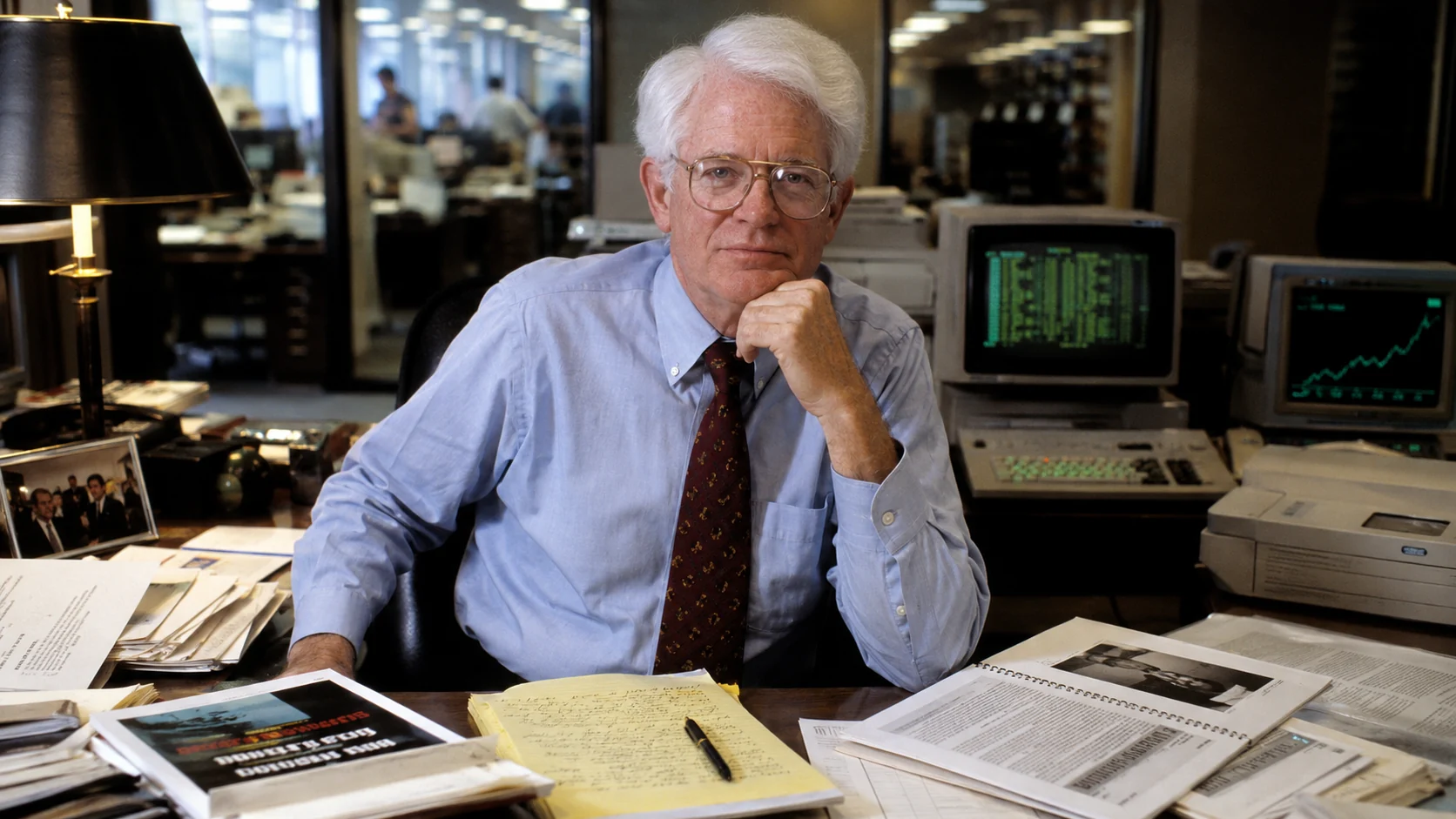
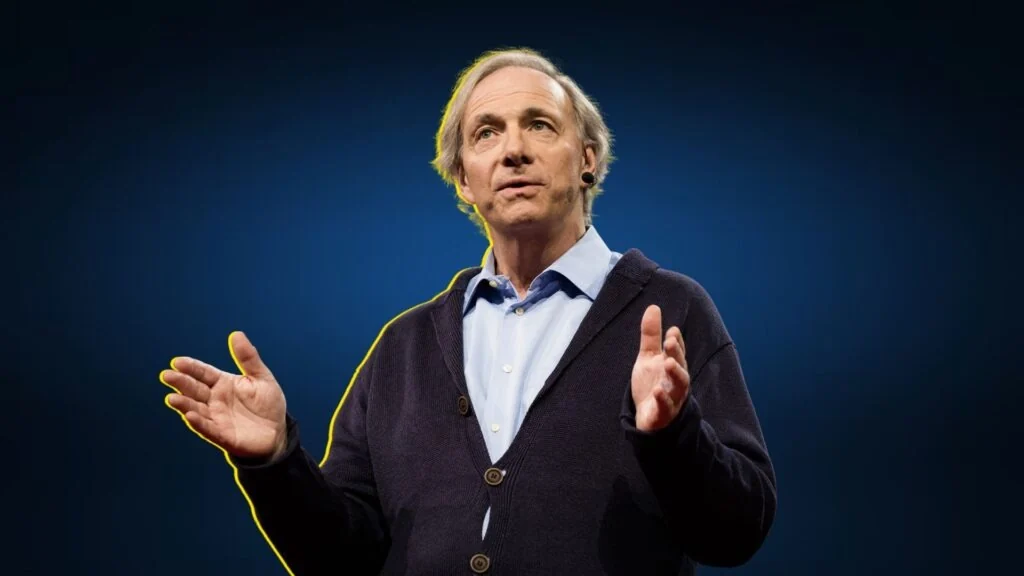
From a Small Apartment to a Global Investment Giant
Every successful financial institution has an origin story, but few begin as modestly as Bridgewater Associates.
In 1975, Ray Dalio founded the firm from his small apartment in New York City. At the time, there were no billion-dollar portfolios, no global reputation, and no certainty that the business would survive. It was simply an investor trying to understand how economies really worked and how that knowledge could help clients make better decisions.
Half a century later, Bridgewater manages hundreds of billions of dollars and has become the world's largest hedge fund. The journey wasn't driven by one brilliant investment. It was built through decades of refining a process that valued consistency over prediction and discipline over emotion.
Curiosity Became His Greatest Advantage
Long before he became famous, Dalio developed a habit that would shape his entire career: asking why.
Why do economies expand and contract?
Why do interest rates affect markets the way they do?
Why do investors repeatedly make the same mistakes during periods of fear and optimism?
Instead of accepting simple explanations, Dalio searched for patterns that repeated across different countries and different decades.
He believed that financial markets weren't random. They were influenced by economic forces that followed recognizable cycles. Understanding those cycles became far more important than trying to predict tomorrow's headlines.
That mindset helped Bridgewater build investment strategies based on probabilities rather than guesses.
Mistakes Became Part of the Process
Many investors try to hide their mistakes.
Dalio did the opposite.
One of the defining moments of his career came in the early 1980s, when he confidently predicted a severe economic collapse that never happened. His prediction proved wrong, clients disappeared, and Bridgewater came close to shutting down.
It was a painful lesson.
Instead of blaming the market, Dalio examined his own decision-making.
He later described that experience as one of the most valuable moments of his career because it taught him that confidence and correctness are not the same thing.
From then on, he became far more willing to question his own assumptions and actively search for evidence that challenged his views.
That humility became one of Bridgewater's greatest competitive strengths.
Principles Over Predictions
Most investors spend their time asking what will happen next.
Dalio focused on building principles that could work regardless of what happened.
He developed systematic approaches based on economic relationships rather than emotional reactions. Instead of relying entirely on instinct, Bridgewater increasingly used research, historical data, and clearly defined decision-making processes.
This didn't eliminate mistakes.
No investment strategy can.
But it reduced the likelihood that major decisions would be driven by fear, excitement, or overconfidence.
The goal wasn't to be right every time.
It was to create a process that performed well over many different market environments.
Radical Transparency Was Unlike Anything on Wall Street
Perhaps the most unusual aspect of Bridgewater wasn't its investment strategy.
It was its culture.
Dalio introduced the concept of radical transparency, encouraging employees to challenge ideas openly, regardless of seniority. Meetings were often recorded, feedback was expected, and decisions were evaluated based on evidence rather than job titles.
The approach wasn't comfortable for everyone.
Some employees found it demanding.
Others believed it created one of the most intellectually honest workplaces in finance.
Dalio argued that good ideas should win because they're better—not because they're proposed by the most powerful person in the room.
That philosophy became one of the defining characteristics of Bridgewater's identity.
Diversification Was More Than a Buzzword
Many investors diversify by simply owning more investments.
Dalio believed diversification required understanding how investments behave under different economic conditions.
Stocks, bonds, commodities, inflation-linked assets, and other investments don't always respond to the economy in the same way. Some perform well during growth. Others become more valuable during recessions or periods of rising inflation.
Bridgewater built portfolios designed to balance those different environments rather than relying on a single economic outcome.
The firm's famous All Weather approach reflects that philosophy.
Instead of trying to predict which economic scenario will occur next, it prepares for several of them at the same time.
Success Came From Managing Risk
People often associate great investors with spectacular returns.
Dalio spent just as much time thinking about losses.
Protecting capital during difficult periods allows investors to continue benefiting when conditions improve. Losing less during downturns often matters as much as earning more during bull markets.
This emphasis on risk management became central to Bridgewater's long-term success.
Rather than chasing the highest possible return, the firm focused on building portfolios capable of surviving many different economic cycles.
That approach may seem less exciting.
Over decades, it proved remarkably effective.
Bridgewater Grew Because Institutions Trusted the Process
Large pension funds, governments, sovereign wealth funds, and other institutional investors don't choose investment managers based on one good year.
They look for consistency.
Bridgewater earned that trust by demonstrating disciplined research, rigorous analysis, and a willingness to continuously improve its investment process.
The firm's reputation grew gradually.
One satisfied institutional client often led to another.
Over time, that reputation became one of Bridgewater's most valuable assets.
Trust, once earned, compounded just like investment returns.
Lessons Beyond Investing
Dalio's influence extends far beyond hedge funds.
His books, interviews, and research have introduced millions of people to concepts such as economic cycles, decision-making, risk management, and the importance of learning from failure.
Not every investor agrees with his methods.
Not every prediction has been correct.
Even Dalio acknowledges that.
What many admire is his willingness to study mistakes with the same seriousness as successes.
That mindset may be more valuable than any individual investment strategy.
Great Investing Begins With Better Thinking
Ray Dalio didn't build the world's largest hedge fund because he could predict every market movement.
No investor can.
He built it by creating a system that valued independent thinking, disciplined analysis, intellectual honesty, and preparation over certainty.
Markets will always surprise investors.
Economies will continue changing.
Unexpected events will always appear.
The goal isn't to eliminate uncertainty.
It's to build a process strong enough to succeed despite it.
That may be Ray Dalio's greatest lesson.
Long-term success isn't built by always being right.
It's built by continuously learning how to become less wrong.
Sources
Bridgewater Associates — About Bridgewater
Bridgewater Associates — Research & Insights
This article was written by the owner of Finance Atlas. The information presented was researched using the authoritative sources listed above.
Continue Reading